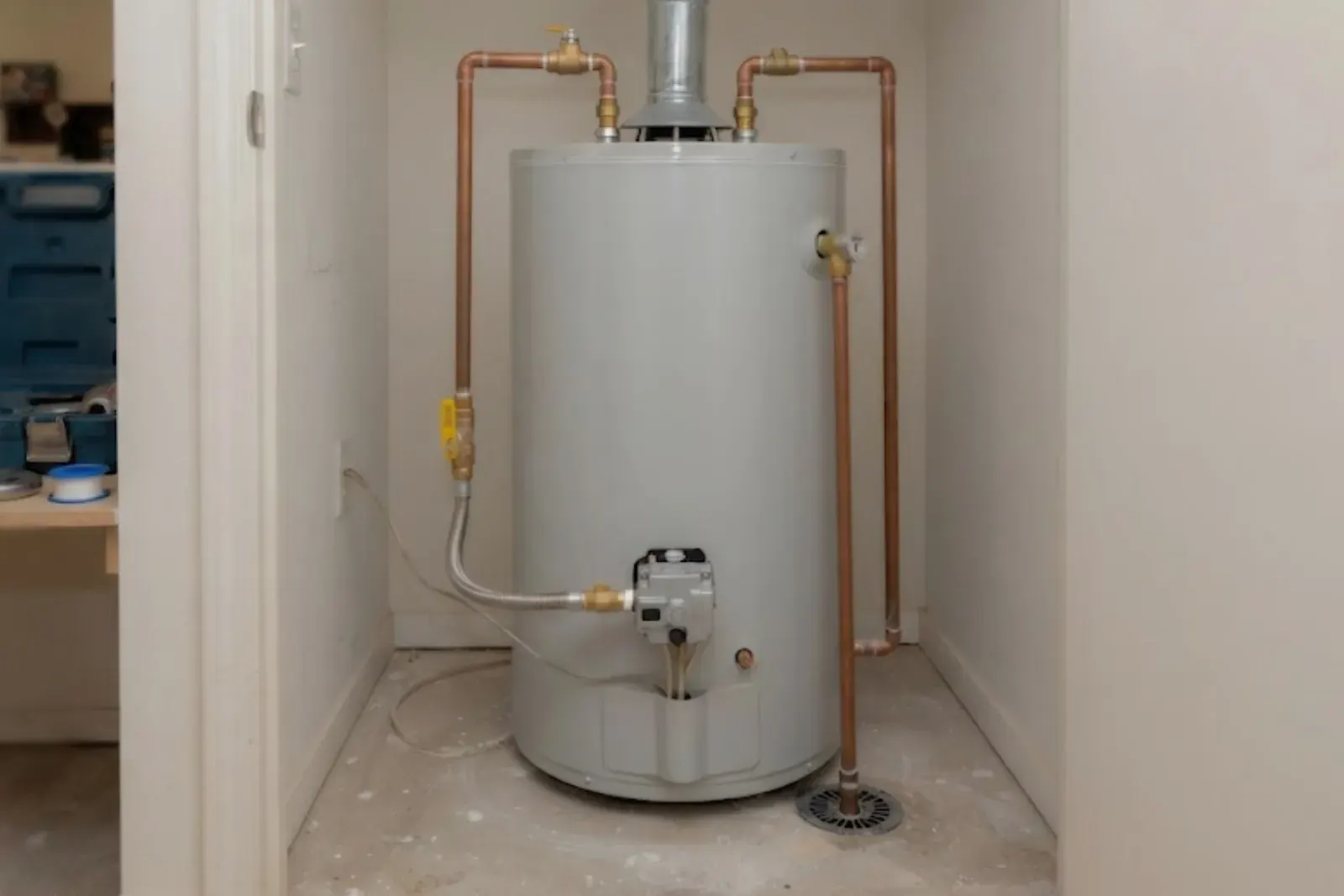
Emergency water heater replacement when the tank fails at night
Tanks tend to fail in the worst hour. A caller wakes to an alarm, finds an inch of water in the hallway and wants it stopped before the floors swell. Dispatch takes these calls after hours and on weekends, and same-day appointments are offered when available. Say whether the heater is gas or electric, where it sits and how much water is out.
A replacement tank has to meet the plumbing codes adopted locally, which cover the relief valve discharge, expansion control, venting and seismic or strapping needs where required. Permit rules vary, so ask the City of Goose Creek building inspection division whether a swap needs a permit and a final inspection.
A leaking tank body cannot be patched. The steel liner corrodes from the inside, and by the time water appears outside, the damage is done. That is why a 15-year-old tank dripping into a bucket is a replacement call, not a repair call. If you are not sure, a repair visit will tell you honestly which side of the line you are on.
Before we arrive: stop the damage
- Shut the cold water to the tankTurn the valve on the cold inlet pipe clockwise. If it will not move, close the main water shutoff for the house instead.
- Turn off the power or gasFlip the breaker for an electric heater. Set a gas heater's control to off or close its gas valve. A gas smell means everyone leaves the house and calls the gas utility from outside.
- Do not drain it indoorsDraining a hot tank through a hose can scald you. Wait for the plumber unless the water is cool and you know where the drain valve is.
- Get water off the floorMop, squeegee or wet-vac the water and run fans. Drywall and cabinets wick water upward within hours.
- Photograph before you cleanCapture the tank, its data label and the water damage for your insurer. Keep the old tank until the plumber has seen it.
- Keep people away from outletsIf water reaches outlets or the panel, do not touch them. Call the plumber and tell them.
Repair or replace: a decision table for your tank
How the common situations usually resolve
| What you see | Likely cause | Usual answer |
|---|---|---|
| Water at the tank base, rust streaks on the shell | Corroded liner or seam failure | Replace the tank |
| Drip from a top fitting or the relief valve | Loose or worn fitting, high pressure | Repair, then check pressure and thermal expansion |
| No hot water, tank 10 years or older | Failed element or burner plus an aging tank | Replace if more than one part is failing, otherwise repair |
| Rotten egg smell, rusty hot water | Spent anode rod, bacteria | Anode swap if the tank is sound, replace if rust is advancing |
| Rumbling and short hot water on a tank over 12 years | Heavy sediment and a tired tank | Replace, since flushing rarely recovers it |
| Pipe leak soon after a prior replacement | Stressed connections, no expansion tank | Repair the connection and correct the cause |
Tanks generally last about 8 to 12 years, with some going longer on soft or well-maintained supplies. The data label carries a serial number that dates the heater. If it is near or past that range and something expensive has failed, spending on a repair is usually money chasing a failing tank.
Signs the tank is finished
Replacement checklist: how to tell
- Water under the tank that returnsDry it, check again in an hour. New drops from the shell mean the liner has failed.
- Age near 10 years or moreRead the serial number on the data label to find the build date.
- Rusty hot waterRust from only the hot taps points to the tank, not the pipes.
- Repeated repairsA second major part in two years is a sign the tank is wearing out as a system.
- Cold water at the bottom of the showerSediment has built up and covers the lower heating surface or element.
- Bulging or hissingA swollen tank or a hiss from the relief valve means pressure. Shut off power or gas and call at once.
Choosing the new heater: same fuel, heat pump, or tankless
In an emergency, swapping like for like is the fastest route, because the gas line, vent and electrical circuit already match. A standard tank fits most closets, and the plumber can usually bring the right size. Matching capacity to your household matters more than chasing the largest tank.
A heat pump water heater, also called a hybrid, pulls heat from the surrounding air and uses far less electricity than a standard electric tank. It needs room around it for airflow, a drain for condensate and a 240 volt circuit, and it cools the space it sits in. In a garage or a large utility room it works well. In a tiny closet it may struggle.
A tankless unit changes the install more: bigger gas line, special venting, and a different budget. It is not usually the right emergency choice at midnight, but you can plan it afterward. See tankless options and service for how that decision works.
Switching from gas to electric
Some homeowners want to leave gas behind. Going electric means a dedicated 240 volt circuit, enough panel capacity and a tank rated for it. The old gas line must be capped safely and the vent removed or sealed. Permit rules vary, so ask the City of Goose Creek building inspection division what applies before the switch, and expect a longer visit than a same-fuel swap.
How a replacement visit runs
- Assess and shut downThe plumber confirms the failure, secures water and fuel, and checks the closet, vent and connections.
- Drain and removeThe old tank is drained and disconnected, then hauled out of the house.
- Set the new heaterThe new unit is placed, connected with new supply lines and fittings, and fitted with a relief valve and discharge pipe.
- Vent or wireGas heaters get a draft and combustion check. Electric units get wiring checked and connected.
- Fill, test and explainThe tank is filled, purged of air and tested for leaks and pressure. You are told the settings and what to watch.
Tank down and water spreading? Call now and tell us the fuel type and where the heater sits.
☎ Call (855) 575-2890After a flood: what to ask about before the new heater goes in
When a night-time flood takes the old heater out, the room often needs attention too. A gas heater that sat in standing water may have damaged controls and a rusted base, and a floor drain or pan that was missing should be fixed now. Ask the plumber about a drain pan with a drain line, a leak alarm and a shutoff valve within reach.
Also ask about pressure. High household pressure or a closed system without an expansion tank shortens a new heater's life and has caused burst lines right after replacements. If water already escaped from a pipe, see repairing a burst line and mention it on the phone.
How to check any plumber's licence in South Carolina
Ask any plumber for a licence number before work starts. The SC Residential Builders Commission, part of SC LLR, licenses residential plumbing contractors, and a company needs a certificate with a licensed contractor behind it. Confirm the number at llr.sc.gov, which has a way to search for licensees, and be wary of anyone who dodges the question. We dispatch licensed plumbers.
Goose Creek notes: house ages and what that means for the swap
Goose Creek grew fast through the 1970s and again since 2000. Homes from the earlier era may have older venting, tighter closets and hard-to-reach shutoffs, while newer builds often have the heater in a garage or attic. Tell the dispatcher which kind you have, because attic installs need a drain pan and a safe path to carry the tank.
Neighboring Hanahan has similar housing, and the same plumbers work across both. If a new heater needs a vent change or a new line, ask the City of Goose Creek building inspection division whether a permit is needed, because permit rules vary.
What drives the cost of a water heater replacement
- Tank size and fuelA larger tank, a heat pump unit or a different fuel changes both equipment and labor.
- Location and accessAttics, crawlspaces and tight closets take more time to clear, carry and set.
- Venting, gas line and wiringReusing what is there is simpler. A new vent, a longer gas run or a new circuit adds work.
- Code and safety partsA relief valve, discharge pipe, expansion tank and drain pan may need to be added or updated.
- After-hours timingA night or weekend emergency is priced differently from a scheduled day install, and you will hear it first.
Insurers generally see a tank as a wear item with a limited life, so the new heater is on you in most cases. The room it flooded is a separate question and may be covered if the tank burst suddenly. Keep the old tank where the adjuster can see it, photograph the drain pan and the nameplate, and call before the haul-away happens.
Call for a clear price on the right heater for your home before work begins. Call (855) 575-2890.
Questions Goose Creek homeowners ask
Often yes, when the right tank is in stock and the closet and venting are easy to work with. Ask dispatch for a same-day visit and they will say what the schedule allows. Gas to electric changes, tight attics and vent changes take longer, so describe the setup honestly when you call and the dispatcher can plan for it.
Yes. Dispatch runs 24/7 and nights and weekends are covered. If the tank is leaking, shut off the cold water and the power or gas first, then call. We will ask the fuel, location, tank size and how much water is out, so the right plumber is sent.
Check the age on the serial number label. A tank near 10 years, with rust or water at the base, is usually finished. A younger tank with a failed element or thermostat is often a good repair candidate, and the plumber can tell you which case you have after a look.
It can be. It uses much less electricity, but it needs airflow, a condensate drain and a 240 volt circuit, and it cools the room around it. A garage or large utility room suits it. A cramped closet may not.
You need a dedicated 240 volt circuit, spare capacity in your panel and a safe cap on the old gas line. The flue must be removed or sealed. Before starting, call the building inspection office in Goose Creek about permits, since rules vary.
Yes, removal is part of a normal replacement visit. Drain the tank only if the plumber asks you to. Keep the old unit available until they have looked at it, since the failure point can help explain what went wrong.
Replacement work reaches past the city as well, including Hanahan and Ladson, with Moncks Corner, Summerville and North Charleston also covered in the service area. Give the dispatcher your address, the tank size and the fuel, and they confirm coverage for your street before a licensed plumber is sent to swap the unit.
Have a different question about water heater replacement?
☎ Call (855) 575-2890