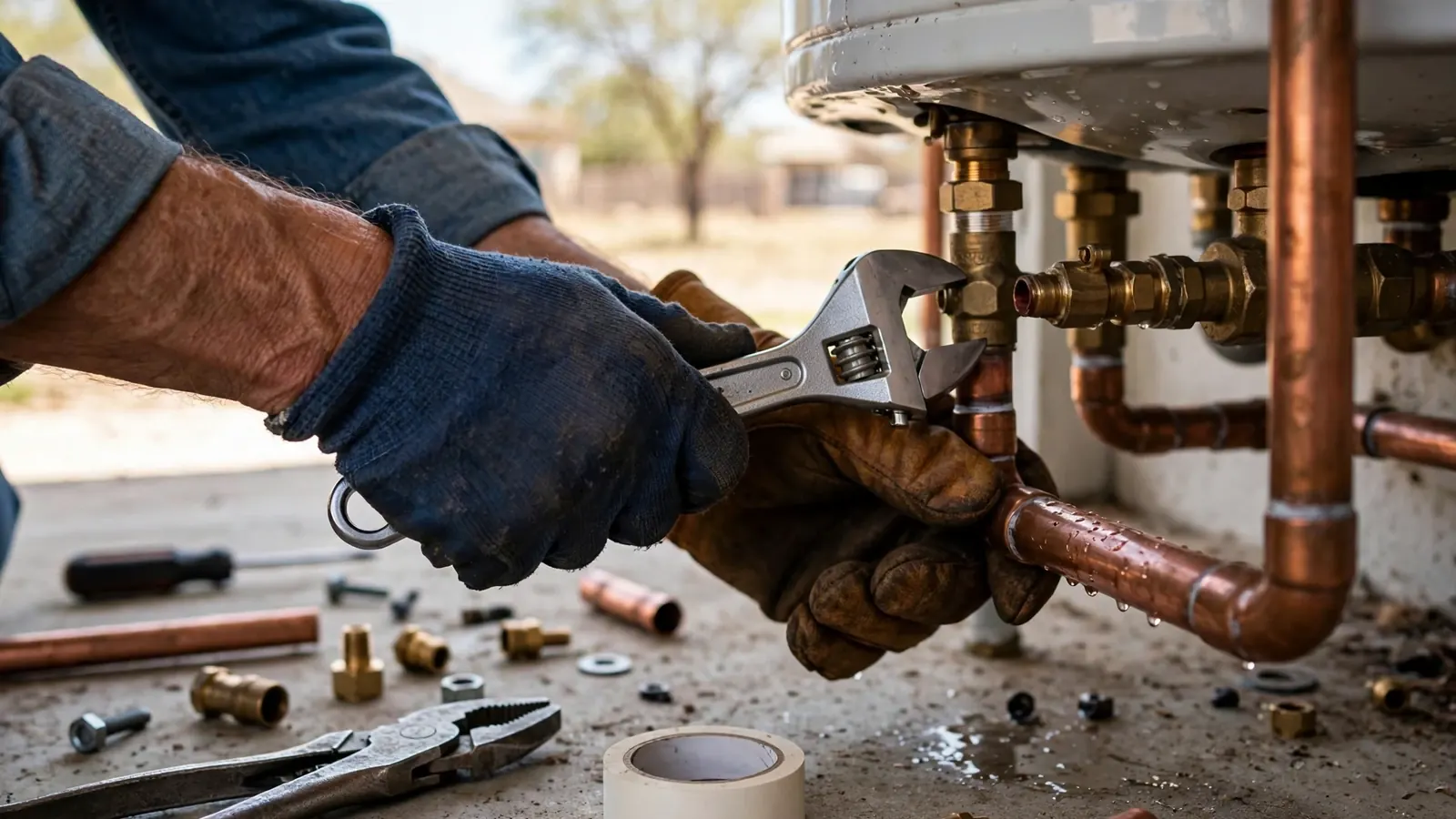
Emergency water heater repair, nights and weekends included
A tank pouring water into a garage or closet does not wait for business hours. Same-day appointments are offered when available, and calls that come in after hours go to the same dispatch line. Tell the dispatcher what you see: water on the floor, no hot water, a popping noise, a pilot that will not stay lit, or a breaker that trips.
Safety parts such as the temperature and pressure relief valve and the gas controls are governed by manufacturer instructions and the plumbing codes adopted locally (built on the UPC and IPC model codes). A plumber should never bypass or cap a relief valve to stop a drip, because that valve is the tank's last protection against over-pressure.
Callers often describe a heater that was fine at bedtime and flooding by morning. A slow drip from a tank around 15 years old usually means the steel lining has failed, and a bucket under it buys only a few hours. If the water comes from a fitting or valve on top, a repair may still make sense. If the shell itself is weeping, a failed tank is the honest answer.
Before we arrive: make the heater safe
- Cut the power or gasFor an electric unit, switch off its breaker. For a gas unit, turn the control knob to off or close the gas valve on the supply line. If you smell gas, leave the house and call the gas utility from outside.
- Close the cold supplyTurn the valve on the cold pipe above the tank clockwise until it stops. That stops fresh water from feeding the leak. If the valve is stuck, use the main shutoff for the house.
- Leave the relief valve aloneNever cap or plug the pipe running down from the temperature and pressure relief valve. It is the tank's safety release, and the water from it can scald.
- Protect the floor and the wallsMove boxes and stored items off the floor, then mop or wet-vac the water before it wicks into drywall. Do not step into standing water near outlets or a wet panel.
- Take photosPhotograph the leak, the data label on the tank and any error code on the display. Your insurer and the plumber will both want them.
Water heater leaks: top, side, bottom, or somewhere else
Where the water shows tells you a lot. Drips at the top usually come from the inlet and outlet connections, the relief valve or a corroded nipple, and those can often be repaired. Water pooling underneath is harder to read because it could be a weeping drain valve, condensation or the tank shell.
A plumber dries the tank and fittings, then watches where new water appears. Condensation on a cold tank in a humid closet can look like a leak and then vanish once the burner runs. Rust streaks on the jacket, wet insulation and water inside the burner chamber of a gas unit point to the tank itself. Once the shell leaks, no sealant fixes it.
Sometimes the water is not from the heater at all. A supply line, a pipe in the attic or a fitting above the closet can drip onto the tank and fool everyone. If the heater is dry on top but water keeps appearing, ask about pinpointing the source before anyone opens a wall.
No hot water: the checks that find the cause
No hot water is the most common reason people call about a heater, and it often comes down to one part. We hear about pilots that went out, breakers that tripped and units that quit after a power blip. You can check the breaker and the gas valve safely, and the rest needs tools and a meter.
How a no-hot-water visit runs
- Confirm fuel and powerThe plumber checks the breaker, the gas valve and the pilot or igniter. A heater with no power or gas is a supply problem, not a failed heater.
- Test the partsGas units get a flame sensor, thermocouple and gas control check. Electric units get upper and lower element and thermostat tests with a meter.
- Check the safety limitThe high-temperature cutoff trips when something overheats. Resetting it once is reasonable. If it trips again, there is a fault to find, not a button to keep pressing.
- Look at sediment and flowRumbling or popping means scale is baked onto the heating surfaces. A broken-down dip tube sends cold water to the top of the tank, which gives short, lukewarm showers.
- Repair or adviseIf the fix suits the heater's remaining life, it gets done. If the tank is leaking or worn out, you hear that before any work starts.
Two other calls come up often. A pipe that burst or leaked soon after an earlier heater swap points to stressed connections, high water pressure or a missing expansion tank, so say so on the phone and see burst pipe repair if water is flowing. A noisy tank, or no water at the taps after a fixture was shut off, is usually a valve or sediment problem a plumber can sort out in one visit.
Gas, electric, or hybrid heat pump: how repairs differ
Common faults by heater type
| Heater type | Common faults | What the repair usually involves |
|---|---|---|
| Gas tank | Pilot or igniter out, dirty burner, worn thermocouple, poor draft | Burner cleaning, sensor or thermocouple swap, gas control valve replacement and a flue draft check |
| Electric tank | Failed upper or lower element, bad thermostat, tripped limit switch | Meter testing, then element or thermostat replacement after part of the tank is drained |
| Hybrid or heat pump | Error codes, fan or condensate trouble, clogged air filter, sensor faults | Reading the display, cleaning the filter and condensate line, then parts that may need the maker's support line |
| Any type | Relief valve weeping, drain valve drip, corroded fittings | Replacing the valve or fitting, then checking water pressure and thermal expansion |
Gas tank heaters
A gas heater that lights and then shuts off often has a dirty flame sensor or a weak thermocouple. Those are quick parts. Soot, a yellow flame or a scorched look around the burner is different: turn the unit off and call, because that can mean poor combustion and carbon monoxide. Older homes with oversized chimney flues can also cause weak draft, and fixing that is venting work covered under planned installation.
Electric tank heaters
Electric heaters have two elements and two thermostats. When the upper element fails you get no hot water, and when only the lower one fails the hot water runs out fast. A meter test is quick, and the part is straightforward. Repeated breaker trips can also mean a shorted element or damaged wiring, which is why the plumber tests before replacing anything.
Hybrid and heat pump heaters
Heat pump units add a fan, a compressor, an air filter and a condensate drain. Many faults are as simple as a clogged filter or a blocked drain line. Some brand-specific parts and software resets go through the maker, so give the brand and the error code when you call. That lets the dispatcher send someone who can read it.
Signs your heater needs a plumber now
- Water around the baseAny pooling that returns after you dry it, especially with rust streaks on the tank.
- Rotten egg smellHot water that smells of sulfur often points to a worn anode rod and bacteria in the tank.
- Rumbling or poppingScale on the bottom heats unevenly and boils water trapped under it.
- Pilot keeps going outA weak thermocouple or draft problem. Do not keep relighting it all day.
- Breaker tripsA shorted element or damaged wire. Leave the breaker off until it is tested.
- Hot water runs out fastA failed lower element, a broken dip tube or heavy sediment.
- Relief valve dischargingExcess pressure or temperature. Do not plug the valve.
- Soot or scorch marksShut the gas off and call right away.
Water on the floor or the shower gone cold? Call now and describe what you see.
☎ Call (855) 575-2890Is it worth repairing, or is the tank finished?
The age on the data label, the part that failed and whether the shell is leaking decide this. A new element on a 7-year-old electric tank is a sensible repair. A leaking shell on a 14-year-old tank is not, and you should hear that plainly. An anode rod swap can extend a sound tank, but it will not rescue one that already leaks.
If the answer is replacement, ask about replacing the tank the same visit, or whether moving to a tankless unit suits your gas line and closet.
Goose Creek notes: sediment, closets and older homes
Scale and sediment shorten the life of elements and burners in any city. Ask the City of Goose Creek Water Division for the latest water quality report and test your tap, then pass the result to the plumber. It decides whether a yearly tank flush and an anode check are worth doing on your heater.
Goose Creek grew quickly in the 1970s and again since 2000, so heaters sit in closets, garages and attics of very different ages. A tight closet limits what can be repaired in place and what can fit later. Neighbors in Hanahan face the same mix, and the plumbers we dispatch cover both towns.
What drives the cost of a water heater repair
- Which part failedAn element or a thermostat is a smaller job than a gas control valve or a heat pump component.
- Heater typeGas, electric and heat pump units differ in parts, labor and how long testing takes.
- AccessA heater in a tight closet, attic or crawlspace takes longer to reach, drain and service.
- TimingA night or weekend call carries a different rate than a scheduled daytime visit, and you should hear it before work starts.
- Age and conditionOn an old tank, a repair that costs a large share of a new heater may not be worth doing.
When a tank splits and floods the utility room, the water damage can be a covered sudden event. A heater that has leaked a little for months, or an element that simply wore out, is wear and normally is not. Photograph the tank, the rust trail and the floor, then ask your insurer which category yours is.
Call for a clear price on your heater before any work begins. Call (855) 575-2890.
Questions Goose Creek homeowners ask
Yes. The line runs around the clock, so a tank leaking at midnight or a cold shower on Sunday goes through the same call as a weekday. Turn off the power or gas and the cold supply first, then call and describe what you see. Same-day visits are arranged when the schedule has room.
Sometimes. If the water comes from the drain valve, a fitting or the relief valve, it is a repair. If the tank shell is leaking, repair is not possible, and replacement is the safe answer. The plumber dries everything off and watches where the first new water appears.
It can be. A weak thermocouple is a common and cheap cause, but poor draft can also blow the flame out and push exhaust into the room. Do not relight it repeatedly. Turn the gas control to off, ventilate, and have it checked.
A shorted heating element, a damaged wire or a failing thermostat is the usual cause. Leave the breaker off, because resetting it over and over can overheat wiring and make the fault worse. A meter test finds the bad part quickly, and the plumber can check the wiring at the same time.
Yes, many faults are basic, such as a clogged air filter, a blocked condensate drain or a sensor fault. Some parts and resets go through the manufacturer, so have the brand, the model and the error code ready when you call.
Often it covers the sudden water damage from a tank that bursts, but usually not the heater itself, and not damage from a slow leak or old age. Your policy decides, so photograph everything, keep the old parts and call your insurer before major cleanup begins.
A leaking tank in Ladson or a heater with no hot water in Hanahan goes through the same call line as one in Goose Creek. Crews also work around Summerville, and callers from North Charleston or Moncks Corner are welcome. Give dispatch the street and they will tell you whether it falls within range, then assign a licensed plumber for the repair.
Have a different question about water heater repair?
☎ Call (855) 575-2890