Water coming up tonight? Do these things before the plumber arrives
Backups love bad timing. A full laundry cycle, a houseful of guests, or a heavy rain can push a partial clog into a full stop, and that usually happens after supper or on a Saturday. We take after-hours calls for exactly this reason, and the steps below keep a bad evening from turning into a ruined floor.
Cleaning a drain does not change the code-required parts around it. Trap arms, vent connections and cleanout access follow the plumbing codes adopted locally, and the plumber should leave them as the standard intends instead of cutting a shortcut to get the cable through.
Before the plumber gets there: stop all water use
- Stop every drainNo flushing, no dishwasher, no washing machine, no showers. Every gallon you send down a blocked line has to go somewhere, and it will pick the lowest fixture.
- Keep chemical cleaner out of itCaustic drain cleaner sitting in a standing pool can burn skin and eyes, and it makes the cable work harder to do safely. If you already poured some, tell the plumber when they walk in.
- Move people and pets backWater that has come up through a floor drain or tub can carry sewage. Keep children and pets out of it and wear rubber gloves and boots if you must step in.
- Shut off the power near standing waterIf water is near outlets, a water heater or a basement panel, leave the room and shut off the breaker only if you can reach it dry. Otherwise stay out and tell us on the call.
- Find your cleanout if you canMany houses have a capped cleanout pipe near the foundation or in a crawl space. Do not open it while the line is full, but knowing where it sits saves time once we are there.
Reading the clog: where it sits decides what it needs
What the symptom tells us
| What you see | Likely location | Usual approach |
|---|---|---|
| One sink or tub drains slowly, others fine | Fixture trap or short branch line | Hand auger or small drum cable, then a flush test |
| Tub gurgles when the washer drains | Shared branch line | Medium cable, camera check if it returns |
| Toilet and tub both slow, sewer smell in the bathroom | Bathroom group branch | Cable through the toilet flange or a cleanout |
| Several fixtures back up together | Main building drain | Large cable, then camera and possible jetting |
| Water bubbles up in a floor drain or tub when you flush | Main line blocked downstream | Cleanout access, heavy cable, camera |
| Clog returns every few weeks | Roots, a sag or heavy buildup | Camera first, then jetting or a repair plan |
Drain cleaning for tubs, showers, washers and gurgling toilets
Most calls about a slow tub or a gurgling toilet come from a clog deeper than people expect. A plunger and a short hand snake reach the trap and maybe a few feet beyond, but hair, soap scum and lint pack tightly farther down the branch line. Callers often tell us they tried everything and the water only drained for a day.
When several fixtures act up at once, the blockage is almost always past the point where the lines join. A toilet that gurgles when the shower runs, or a washer drain that spits water into the tub, is the house telling you the shared line is partly closed. Sewer gas smell in a bathroom points the same way, since a struggling vent or a dry trap lets odor back in.
We run a cable sized to the pipe, usually a larger head for a four-inch line and a smaller one for a tub drain, and then flush with water to prove the line carries a full load. If the cable keeps hitting something solid, we put a camera in to see what it is before anyone starts guessing. A stubborn buildup may call for hydro jetting to scour the pipe walls.
A clogged drain that plunging and chemicals could not fix
If you have already plunged, poured cleaner and run a short snake, the clog is not a simple hair plug. Typical causes at that stage are a grease and soap cake lining the pipe, a child's toy or wipes caught at a bend, or tree roots working into a joint in the yard line. The tell is that water drains slowly for a day and then returns to standing.
A four-inch main clog behaves differently from a sink clog. Everything in the house shares that pipe, so a bathroom, a laundry and a kitchen all slow down together, and a flush upstairs can push water out of the lowest drain. This is the moment to stop using water completely and call, since each extra load makes the overflow worse.
Overnight backups are common too. Water sits in the line while the house sleeps, the blockage settles, and the first morning shower finds it. Same-day service matters here because the standing water is the real damage.
Drain snaking and cabling: what a cable can and cannot do
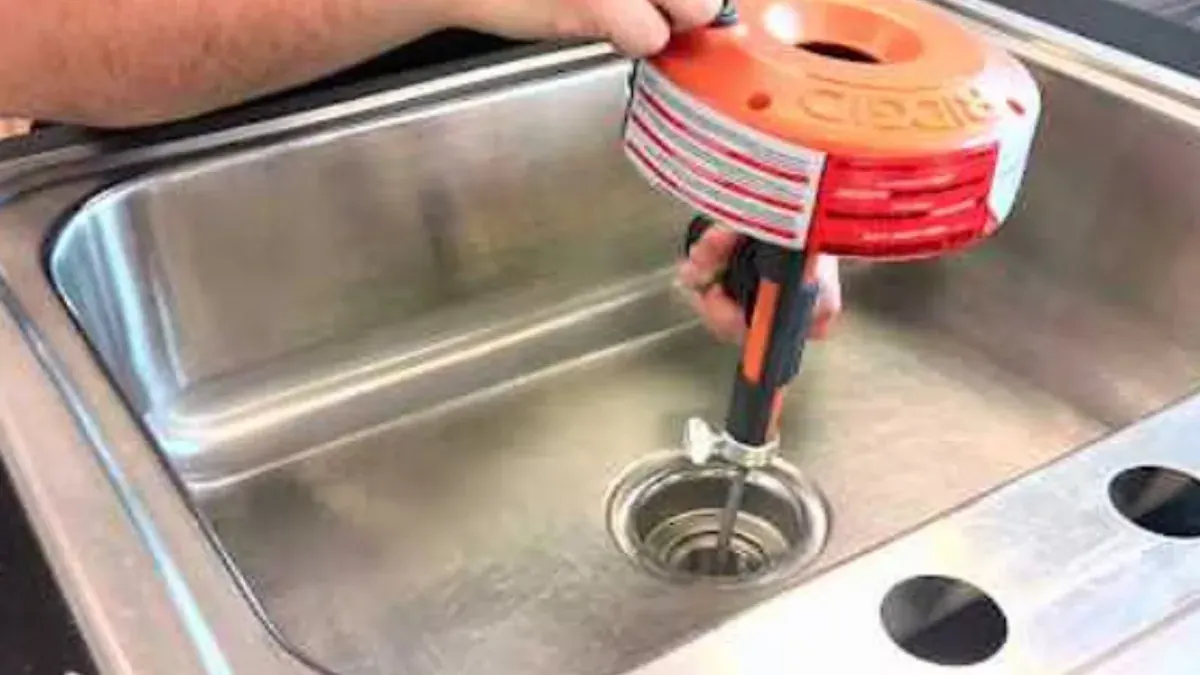
Cabling means feeding a rotating steel cable into the drain until the cutting head chews through or hooks the blockage. It works very well on hair, paper, grease and soft roots. It does not repair a cracked or collapsed pipe, and it can leave a ragged edge in an old pipe if pushed too hard.
How a cable clearing visit runs
- Walk the symptomsWe ask which fixtures are affected and in what order, because the pattern points to the clog's depth.
- Pick the entry pointA cleanout is best. Pulling a toilet to reach the line is the fallback, and we reset it with a new wax ring.
- Cut and retrieveThe cable cuts through the blockage and we pull back what we can, so we know what caused it.
- Prove the lineWe run water through the drain and, on bigger jobs, send the camera down to confirm the pipe is clear and sound.
A short snake that stopped around twenty feet is the story we hear most. If your last visit ended that way, the next step is a longer cable or a router head, not another round of the same tool. When a cable breaks off inside a pipe, tell us right away, because the broken piece needs to be retrieved or located on camera.
Kitchen sink clogs and the disposal question
Kitchen drains clog differently. Cooking grease cools in the pipe and builds a waxy lining, then coffee grounds and food scraps catch on it. The sink drains slowly for weeks, a garbage disposal hums and backs up, and then one night the water will not move at all.
A leak under the sink and a clog are easy to confuse. If water pools in the cabinet only when the drain runs, the trap, the disposal flange or a slip joint may be the culprit, not the line. We check both, and a worn disposal that keeps jamming may be a better candidate for disposal repair or replacement than more cabling.
Where the kitchen line runs to a crawl space or out through a wall, the pipe is often two inches across and easy to fill. That narrow bore is why a kitchen clog needs a smaller cable and a careful hand. A strong stream of hot water and dish soap is fine as maintenance, but it will not clear a blockage already packed in.
Storm drain and yard drain cleaning
Not every clog is inside the house. Yard drains, driveway catch basins and downspout lines fill with mud, leaves and roots, and they back up when a heavy rain arrives. The cable we use outdoors is heavier, and we may use jetting to flush silt that has settled in a low spot.
When a drain line is leaking instead of clogged
Sometimes the symptom is a damp spot, a stain on a ceiling below a bathroom, or a smell, with no standing water at all. That points to a drain line leak, often at a joint or a cracked section. Clearing it will not fix the leak, so we use a camera to check the pipe and talk through sewer line repair options if the damage is in the buried line.
Signs the clog is deeper than the fixture
- More than one fixture is slowA single slow sink is a branch problem. Two or three together mean the shared or main line.
- The toilet gurglesAir is being pushed back through the traps by a blockage downstream.
- A floor drain or tub bubblesWater is looking for the lowest exit, a sign the main is closing.
- Sewer smell indoorsA dry trap, a vent problem or a partial blockage letting gas back up.
- The clog keeps coming backA cable can clear it, but roots, grease buildup or a sag may be rebuilding it.
- A prior snake stopped shortSomething solid, or a bend, is stopping the cable. A camera shows which.
Goose Creek homes and the lines under them
Goose Creek grew quickly in the 1970s and again after 2000, so the city holds both older homes with aging drain pipe and newer ones with fresh PVC. In a house from the Forest Lawn era, a drain that has slowed over the years may be rough inside from decades of buildup, and a camera tells you whether cleaning is enough. In newer subdivisions the usual culprits are construction debris, wipes and grease.
The same mix of older and newer lines shows up next door in Hanahan.
What drives the cost of drain cleaning
- Where the clog sitsA fixture trap takes less equipment and time than a main line reached through a cleanout.
- Access to the lineA reachable cleanout makes the job simpler. If we must pull a toilet or cut a way in, the work grows.
- Pipe size and lengthA long run to the street needs more cable and a bigger machine than a short bathroom branch.
- Method usedCabling, camera inspection and jetting are different tools with different setup, and some jobs need two of them.
- After-hours timingA late-night visit is priced differently from a weekday one, and you hear the number before the cable goes in.
A clog is a maintenance problem, and insurers rarely pay to clear one. The water a sudden backup leaves on your floor is another question, and some policies exclude backup unless an endorsement was added. Read your wording with your insurer before you throw out soaked flooring or furniture.
Describe what the drain is doing, and the quote comes before the cable does. Call (855) 575-2890.
Water backing up or draining slower every week? Call now and a licensed plumber will talk you through the next step.
☎ Call (855) 575-2890Questions Goose Creek homeowners ask
Yes. Our dispatch line runs 24 hours a day, every day, and we send a licensed plumber for backups, overflows and main line stoppages at night, on weekends and on holidays. Tell us which fixtures are affected so we can send the right cable and camera. While you wait, stop all water use and keep chemicals out of the drain.
Both fixtures share a branch line, and a partial blockage downstream makes the pressure of the washer's discharge push air back through the tub trap. It is a warning that the line is narrowing. Clearing it now is far easier than waiting for a full backup.
We advise against it. Caustic cleaner can sit in standing water and burn skin, and it can damage older metal pipe and some joints. If you already used it, tell the plumber so they can wear the right protection and work carefully around the pooled liquid.
Grease and food residue usually build a lining along the kitchen drain, and each new clog is the lining catching more. A cable clears the center but may leave the walls coated. Camera inspection or jetting can tell you whether the line needs a deeper clean.
Often yes. A short hand snake stops at the first bend or after about twenty feet, while our larger cable machines reach farther through a cleanout. If something solid or a collapsed section is stopping the cable, the camera will show it and we will explain the repair choices.
Yes, we clear yard drains, driveway catch basins and downspout lines that fill with silt, leaves or roots. We use heavier cable and, where silt has packed in, jetting to flush it out. Tell us where the drain is and how it behaves in rain.
Take photographs of the water and affected materials before cleanup, note the date and time, and keep damaged items until your insurer says otherwise. Ask for a written note of what the plumber found in the line. A claim goes more smoothly with a clear record of what happened and when.
Have a different question about drain cleaning?
☎ Call (855) 575-2890