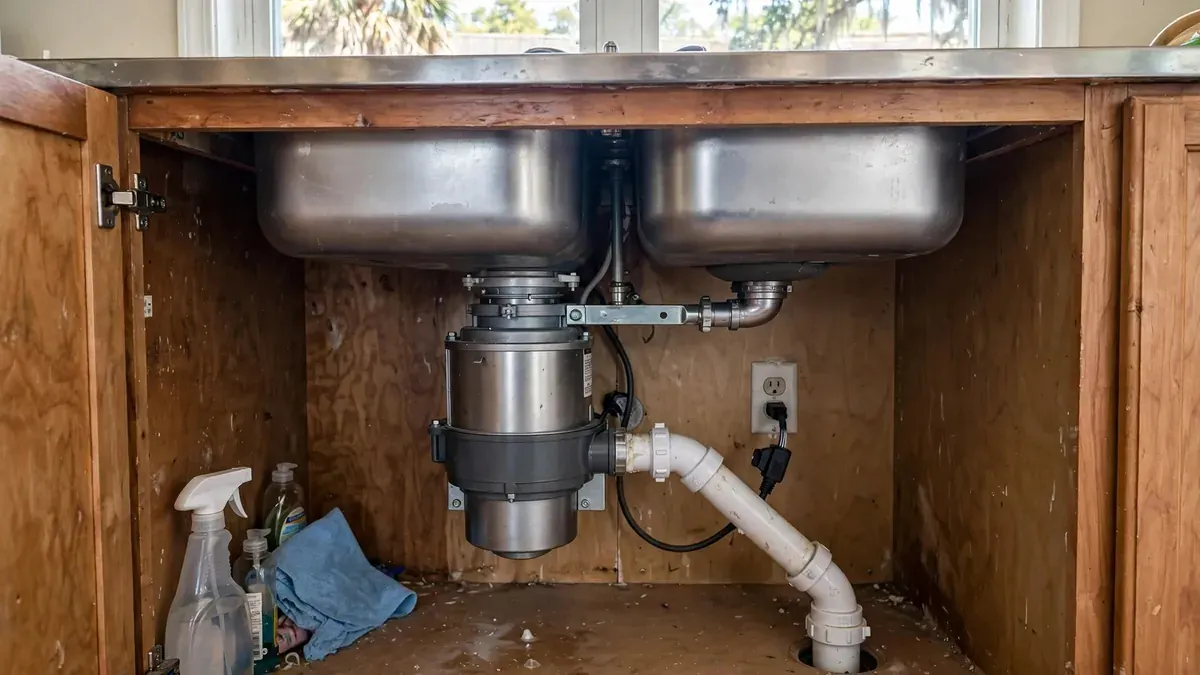
Match the symptom to the cause
What a disposal is telling you
| Symptom | Likely cause | Safe first step |
|---|---|---|
| Hums but the blades do not turn | Jammed flywheel or lodged object | Switch off, then use the hex key in the bottom socket |
| No sound and no power | Tripped overload button or dead outlet | Wait, press the red reset button under the unit |
| Water dripping from the bottom | Cracked housing or failed shaft seal | Switch off and place a bucket, do not run it again |
| Leak where the sink flange meets the sink | Worn gasket or loose mounting ring | Dry the area and watch for the first bead |
| Sink fills with gray water | Clog in the drain line past the unit | Stop using the sink and the dishwasher |
| Leak at the side hose | Loose dishwasher drain connection | Switch off, tighten the clamp, then test |
Leaking disposals are the real emergency
Callers describe two kinds of disposal leaks. One is a slow drip from the bottom or back of the unit, which means the housing or a shaft seal has failed. The other is a steady stream where the sink drain and the disposal meet. A cracked housing cannot be patched, so the unit has to come out.
A disposal sits on a drain that has to meet the plumbing codes adopted locally (built on the UPC and IPC model codes), including an air gap or high loop on the dishwasher line and a properly vented trap. The manufacturer's installation guide sets the mounting and wiring details, and the plumber follows it.
Overnight and weekend calls usually trace to a leak soaking the cabinet floor, or a sink that will not drain and is sitting full of water. The base of a kitchen cabinet is particle board in most homes, and it swells when it stays wet. Dry the cabinet, empty the space under the sink, and call us so a plumber can come the same day when one is available.
Jams, humming and a disposal that will not start
A disposal that hums but does not spin has a stuck flywheel. A bone, a bottle cap, a fruit pit or a piece of a utensil is usually the cause. With the switch and breaker off, insert the hex wrench that came with the unit into the socket on the underside and work it back and forth until the wheel turns by hand. Pull the object out with tongs, never your fingers.
A unit with no hum at all has often tripped its overload. Press the red reset button under the housing after a short wait. If it trips again right away, the motor is worn or the wiring is failing. At that point, a replacement is a more honest answer than another reset.
Backed-up sinks and the drain line past the disposal
A kitchen drain that fills with gray water often has nothing wrong with the disposal. Grease and food starch build up in the pipe after the unit, and the sink clogs even though the blades turn. The fix is a cable or jet through the line, and when the problem returns every few weeks, a jetting visit that scours the pipe walls clears more than a cable.
Never pour a chemical drain opener into a sink with a disposal. It can sit in the housing, corrode the grind chamber and splash back when the plumber opens the trap. Run cold water while the unit is on, and keep grease, coffee grounds, pasta and fibrous scraps out of it.
Dishwasher connection and drain trouble
A dishwasher drains through a hose that attaches to a small nipple on the side of the disposal. During a remodel, someone often forgets to knock out the plug inside that nipple, and the dishwasher then drains nowhere. After a new disposal is installed, the same oversight causes a dishwasher that leaves standing water in the bottom of the tub.
A loose hose clamp, a sagging hose or a missing high loop are other causes. The hose should rise above the drain connection before it drops back down, which keeps dirty sink water from flowing backward into the dishwasher. If your dishwasher smells or leaves a dirty film, that loop or the knockout plug is where we look first.
Replacing or installing a disposal
A unit with a cracked housing, a seized motor, or one that jams and trips repeatedly is not worth another repair. Horsepower matters less than people expect. A one-half horsepower unit covers light use, while a larger household that cooks daily benefits from three-quarters horsepower or more, with more insulation for quiet running.
Putting a disposal where none existed takes more than the unit itself. The sink needs a disposal flange, the cabinet needs a nearby outlet or a switch, and the trap may need to move. If you already bought a unit and found it hard to fit, tell us the brand, because mounting ring styles differ. Larger kitchen layout changes belong with installing new plumbing for a remodel.
Late-night disposal emergencies in Goose Creek
The night calls we get from kitchens are rarely dramatic. A cabinet is wet, the sink will not drain, or a cracked unit is dripping steadily. We keep the line open on nights, weekends and holidays because a wet cabinet gets worse by the hour, and a kitchen without a working sink makes the next morning harder.
If the water backs up beyond the sink and into other drains in the house, the problem is deeper than the disposal. A cable run through the kitchen branch or a camera may be the next step. Homes in neighboring Hanahan fall into the same pattern, and the Hanahan service area page lists what we cover there.
What a disposal repair visit includes
- Make the unit safeThe plumber switches off power at the breaker before touching anything under the sink.
- Find where water is escapingThe sink, flange, housing and hoses are each dried and checked in sequence.
- Clear the jam or the lineA stuck flywheel is loosened, or the drain beyond the unit is cabled.
- Repair or replaceYou hear whether a seal, a hose, or the whole unit is the right move before work starts.
- Run a full testThe unit, the sink and the dishwasher all run together to catch leaks at every joint.
Before we arrive: keep the kitchen safe
- Switch off the breakerDo this even if the wall switch is off. The wiring sits right next to wet pipes.
- Never reach into the chamberUse tongs or pliers. Blades can move if a switch is flipped by someone else.
- Empty the cabinetMove cleaners and boxes so wet cardboard does not wick water into the floor.
- Stop using the sink and dishwasherBoth feed the same drain, and more water means more leakage.
- Dry the areaTowels and a fan limit swelling in the cabinet base.
Questions to answer before the call
- Where is it leakingBottom, side hose, flange or drain pipe. Each one needs a different repair.
- Does it hum or stay silentA hum means jam. Silence means power or a tripped overload.
- Do you own a replacementIf you bought a unit, tell us the make and horsepower.
- Dishwasher connectedSay so, so the plumber checks the knockout plug and the hose loop.
- Age of the unitOlder units leak more often, which can change the repair-or-replace answer.
What drives the cost of disposal repair
- Repair or replaceClearing a jam is quick. Replacing a unit involves the part, mounting hardware and disposal of the old one.
- Unit size and qualityHorsepower, grind stages and sound insulation change what the unit costs.
- Wiring and switchA new outlet or switch for a first-time install adds electrical work, which may need a separate trade.
- Condition of the drainA corroded trap or a clogged line past the unit adds parts or cable time.
- TimingNights, weekends and holidays can change the visit price, and you hear it up front.
A disposal that jams or burns out its motor is an equipment failure, which a homeowner policy does not normally pay to replace. If a cracked housing floods the cabinet and the kitchen floor in one event, the water damage may be covered. A slow drip under the sink that went unseen usually is not. Your insurer reads the policy and makes that call.
Tell us what the disposal is doing and you get a clear price before the work starts. Call (855) 575-2890.
Kitchen sink leaking or backing up? Call now and a licensed plumber can talk you through the first steps.
☎ Call (855) 575-2890Questions Goose Creek homeowners ask
Yes. Calls are taken day and night, weekends included. If a disposal is leaking into the cabinet or has flooded the kitchen floor, we can often set up a same-day visit depending on the schedule. Describe where the water shows and whether the unit hums, so the right parts come on the truck.
The blades or flywheel are jammed. Switch the unit off at the breaker, insert the hex key into the bottom socket and rotate it back and forth until the wheel moves. Remove any object with tongs. If it still will not turn, the motor may be seized.
Yes, in most kitchens. The sink needs a disposal flange, the cabinet needs power and a switch, and the trap arrangement may change. The plumber checks all three on the visit and tells you plainly if the electrical side needs a licensed electrician before the unit can run.
The plug inside the disposal's dishwasher nipple was probably never knocked out, so the dishwasher has nowhere to drain. A plumber can remove it in minutes. A missing high loop in the drain hose can also cause the same problem.
If the problem is a jam or a loose hose, a repair is reasonable and usually quick. If the housing is cracked, the unit leaks from the bottom, or it keeps tripping the overload, replacement is the better answer, because no patch holds on a cracked housing.
Soft food scraps with cold water running before, during and after. Keep grease, coffee grounds, pasta, rice, potato peels and fibrous vegetables out. Most repeat kitchen clogs trace back to grease and starch building up in the line past the unit.
Have a different question about garbage disposal repair?
☎ Call (855) 575-2890