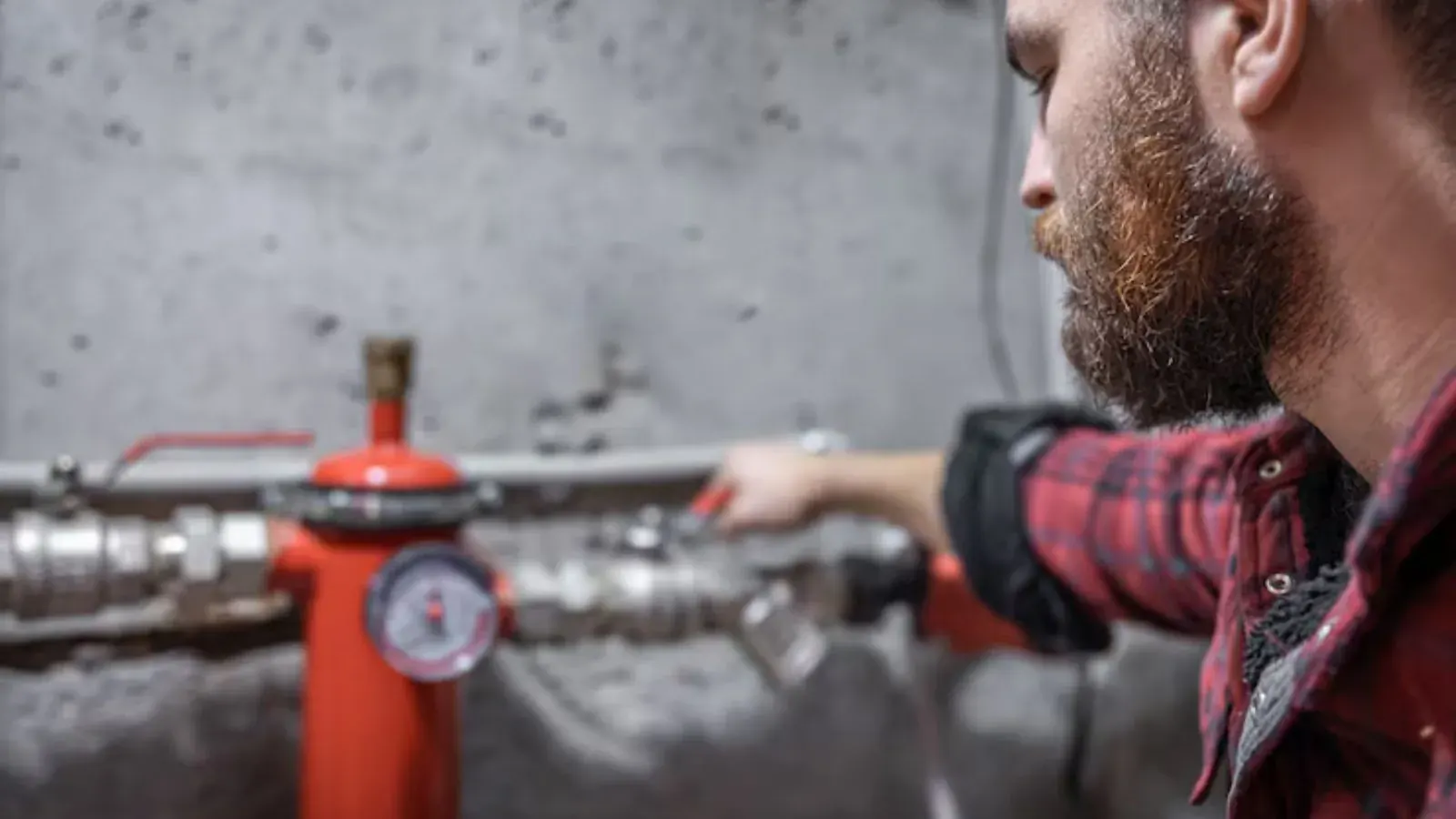
Meter still running, or a high bill with no visible leak
A meter that keeps moving with every fixture off is the clearest sign of a leak you cannot see. Some homeowners describe a trickle, others a steady gallon a minute, and a bill that doubles or triples usually follows. The water can be escaping inside the house, in the yard, or somewhere in the line between the meter and your foundation, and the first job is narrowing which.
Finding a hidden leak is a diagnostic job, and the repair that follows has to meet the plumbing codes adopted locally (built on the UPC and IPC model codes). Acoustic listening, pressure testing and thermal imaging are accepted trade methods, but none of them replaces confirming the exact spot before anything is opened.
Check the cheap suspects first. A toilet flapper that leaks into the bowl can waste gallons all day without a sound, and a few drops of food coloring in the tank will show it. Also look at the ice maker line, the water softener, the water heater relief valve drain and any hose bibb left dripping.
The two-minute meter test
- Stop all water useShut off taps, the dishwasher, the washer, the ice maker and the irrigation clock.
- Read and photograph the meterNote the digits and the small low-flow dial or triangle, which spins when any water passes.
- Wait, then look againIf the digits climb or the dial turns with nothing running, water is escaping somewhere.
- Close the house main valve and check once moreA meter that stops means the leak is inside the house. A meter that keeps moving means the leak sits in the buried line between the meter and the house.
That last step saves hours of guessing. A meter that runs after the house valve is closed points to the buried line, which is the work covered on our water service line repair page. The City of Goose Creek Water Division reads meters, so if the meter lid is flooded or the register looks damaged, tell the Division as well.
Meter still moving after you closed the main? Call now and describe what you saw, and we will send the right detection gear.
☎ Call (855) 575-2890Wet ceilings, damp walls and attic leaks
A brown ring on a ceiling rarely sits right under the leak. Water runs along joists, drywall paper and pipe until it finds a low spot, so the stain can show up several feet from the source. Cutting a hole under the stain often misses the problem, which is why locating comes before any demolition.
Typical culprits include a failed shower pan or tub drain overhead, a loose supply fitting inside a wall, a corroded drain line, and an air handler or water heater drain pan in the attic. A garage ceiling that drips when the upstairs shower runs usually points to a drain or shower valve. Stains that appear only after rain point to the roof, not the plumbing.
We map the wet area with a moisture meter and a thermal camera, then run each fixture above one at a time to see which one wakes the stain. Pressurizing the supply side separately from the drains tells us whether the leak carries clean water or waste. You end up with a marked spot, so the opening in the drywall stays about the size of a hand.
While the stain is spreading
Shut the supply valve to any fixture you suspect and keep it off. If a ceiling bulges with water, poke a small hole at the lowest point over a bucket, well away from light fixtures. Drywall that stays wet for a day or two can grow mold, so speed matters.
Leaks under the house and in the crawlspace
If your home sits on piers or has a crawlspace, the plumbing hangs where nobody looks. Warning signs are a musty smell, sagging insulation, a soft spot in the floor, a faint sound of running water at night, and a bill that keeps rising. A sewer-gas smell in a bathroom suggests a drain leak, which is a different repair than a pressurized supply leak.
The method is methodical. We isolate the supply lines at the main, watch a gauge for pressure loss, then close off zones until the loss stops. Visual inspection with a bright light and a camera follows, checking every elbow, valve and the drain below each toilet. If the drain line is the problem, a camera run can tell you whether it needs sewer line repair or only a joint reseal.
Tell us on the call if you have stored items blocking the access hatch. Clearing it before the visit saves time, and we can tell you what to move safely. Older supply lines in galvanized steel or early plastics often leak at several points, so a second leak found during testing is a signal to price the repiping option.
Buried, yard and meter-box leaks
Underground leaks announce themselves outdoors. Look for a soggy patch with no rain, grass that is greener or taller along a straight line, sunken soil, bubbling near the meter box, or a hiss at the hose bibb. Pressure that sags at every tap while the yard stays dry can also mean a buried leak.
To find it, a pipe locator traces the route of the line. Then a ground microphone and a leak noise correlator listen for the sound of water escaping, and we mark the spot with paint or flags. Plastic pipe carries sound poorly, so on those lines a tracer gas test or a pressure test often confirms what the microphone only suggests.
Responsibility matters before anyone digs. The City of Goose Creek Water Division reads meters, maintains water lines and runs cross-connection control devices, so water bubbling up beside the meter box or in the street may be the city's to fix. Ask the Division where its responsibility ends at your address. A leak past that point belongs to the homeowner and to us.
Irrigation system leaks
Sprinkler leaks hide well because the lawn is supposed to be wet. Clues are a swampy zone, a head that never stops spraying, low pressure in one zone, or a meter that moves only when the irrigation clock runs. We test by running each zone alone while watching the meter, which isolates a cracked lateral or a valve stuck open.
The Water Division oversees cross-connection control devices, so ask if your irrigation backflow assembly needs a test. A lapsed certification can lead to a shut valve. Checking before the watering season starts avoids a dry lawn.
Pool and spa leaks
A pool that loses water faster than evaporation can still have a shell problem rather than a plumbing one. The bucket test, where a bucket of pool water sits on the step and the two levels are compared over a day, helps separate the two. We handle the pipes: return lines, suction lines, heater connections and spa remodel plumbing, using pressure tests on isolated sections. Shell cracks, liners and pump pads belong to a pool specialist.
How leak detection works: the tools and what each one finds
No single instrument finds every leak. Sound travels well in metal pipe and poorly in plastic, thermal imaging needs a temperature difference such as a hot water line, and tracer gas needs the pipe sealed and filled. The plumbers we dispatch combine two or three methods and cross-check them before anyone cuts a surface.
Detection methods and where each one fits
| Method | What it detects | Works best on | Limit to know |
|---|---|---|---|
| Acoustic listening (ground microphone and correlator) | The hiss or vibration of pressurized water escaping | Buried metal lines, slab lines, meter to house runs | Plastic pipe and noisy traffic can mask the sound |
| Thermal imaging (infrared camera) | Temperature differences from hot lines or wet material | Wet walls, ceilings, warm slab spots, hot water leaks | Needs a temperature contrast and a surface it can see |
| Tracer gas (nitrogen and hydrogen mix) | Tiny amounts of gas rising where pipe is breached | Plastic lines and hard-to-hear leaks under concrete | Pipe must be emptied and sealed before filling |
| Pressure testing | Whether a line or zone holds pressure | Isolating supply zones, irrigation, pool lines, drains | Tells you a leak exists, not exactly where |
| Moisture meter and drain camera | Hidden moisture in framing and the inside of drains | Walls, ceilings and suspected drain cracks | Reads what is touched or reached, not the whole structure |
Ask whoever you call which of these they carry. Some callers have already paid a plumber who guessed and cut the wrong spot, and a clear answer about the method is a good sign. Tell us the symptoms and what you suspect, and we match the visit to the equipment.
Commercial leak detection for apartments, plazas and offices
Property managers call about water in a parking lot, a utility notice of a continuous leak, or a sub-meter that keeps climbing. Large sites need a method, not a hunch. We read sub-meters, close valves building by building to see where the movement stops, then use acoustic surveys and pressure tests on the section that remains.
Fire sprinkler piping is a specialty, and repairs to it usually belong to a licensed fire protection contractor, so tell us on the call if that is your system. For domestic water, irrigation and restroom groups, see our commercial plumbing page. Same-day appointments when available apply to businesses too.
After the spot is marked: repair paths and your options
Once the location is marked, the same crew can repair it, or you can take the marked spot to another contractor. The usual paths are a spot repair, a reroute around the bad section, or new pipe, and the choice depends on pipe age and how many leaks testing finds. A leak in a concrete floor leads to our slab leak repair work, and a failed section behind a wall is often a cracked pipe repair.
We dispatch across Goose Creek, and homes in neighboring Hanahan with the same symptoms get the same testing. Leaks do not follow a schedule, so nights, weekends and after-hours calls are handled the same way as a weekday morning.
Before we arrive: slow the water and protect the house
- Close the house main valveTurn the valve clockwise until it stops. If the meter stops with the valve closed, the leak is inside the house.
- Photograph the meterA before photo of the digits and the leak dial helps us and your insurer see how fast water is escaping.
- Stay away from wet outletsShut off the breaker for a flooded room and do not touch switches while standing in water.
- Contain what you canPut a bucket under drips, lift rugs and move electronics. Bring a mop or towels, not a shop vacuum, if the floor is soaked.
- Do not cut or dig yetOpening a wall or slab in the wrong spot adds repair work. Let the location be marked first.
- Skip chemical leak sealersPour-in sealants can clog valves and fixtures and do not fix a cracked pipe.
Signs you need leak detection
- Meter moves with everything offRun the two-minute test above. Movement means water is leaving the system.
- Bill up, habits unchangedA jump you cannot explain by guests, a pool fill or a new irrigation schedule.
- Warm spot on the floorA hot line leaking beneath a slab can heat the surface above it.
- Musty smell with no sourceHidden moisture in a wall or crawlspace often smells before it shows.
- Hissing or running sound at nightListen near the water heater, the meter box and under the house when it is quiet.
- Paint bubbling or a ceiling stainWater has been moving through the material for a while.
- Soggy yard patch in dry weatherA straight green strip over a pipe route is a classic buried-line clue.
My bill jumped but I see no leak
Most high bills have a cause that is not a broken pipe. A running toilet, a stuck irrigation valve, a pool refill or a water-fed appliance can use more than a hidden leak. The meter test sorts this quickly: if the meter is still when everything is off, the extra use came from a habit or a fixture, and if it moves, a leak is real.
If you do find a moving meter and an unexplained bill, ask the City of Goose Creek Water Division for the read dates on your account so you can see when use began to climb. That date often matches a repair, a storm or a new appliance, and it gives the detection visit a starting point.
What drives the cost of leak detection
- Where the pipe isReaching a line in an open crawlspace is simpler than testing one under concrete or a driveway.
- How many lines or zones need testingA single suspect fixture is quicker to check than a whole house, an irrigation system or a multi-building site.
- Pipe materialMetal carries sound well, plastic does not, and that decides which instruments are worth using.
- Whether more than one method is neededHard cases need a second or third confirmation before anyone opens a surface.
- What comes after the findRepair, rerouting or repiping is priced separately, and drywall, flooring or landscaping restoration is often a different trade.
Finding a leak is often not an insured cost by itself, though some policies do pay to open a wall or floor to reach a covered leak. Whether yours counts depends on whether it was sudden or went unnoticed for a long stretch. Keep the meter photos and your leak log, and ask your insurer what it needs before any wall is cut.
Give us your meter reading and symptoms, and we will give you a clear price for your situation before any work starts. Call (855) 575-2890.
Questions Goose Creek homeowners ask
Yes. Call at any hour and a licensed plumber with detection gear is sent. Tell dispatch what the water meter is doing and what you can see, and shut the main valve while you wait. Same-day visits are available when the schedule allows, including on weekends and holidays.
Start with the meter test: shut everything off and watch the dial. If it moves, a leak exists, and closing the house main tells you whether it is inside or underground. If it stays still, look at toilets, irrigation, pool fills and appliances that run on a timer.
Usually yes. A moisture meter, a thermal camera and a pressure test narrow a leak to a small area, and acoustic listening helps on pipes you cannot see. Some jobs still need a small opening to confirm and repair the pipe, but it is cut at the marked spot, not everywhere.
Often. A pipe locator traces the line, a ground microphone listens for the leak, and tracer gas or a pressure test confirms it when sound is weak. Cutting the concrete is a separate step that happens only after the spot is marked and you approve the plan.
Ask when you call, because it depends on the job. What we can say is that you get a clear price before work starts, and that the cost of finding a leak and fixing it are quoted as separate steps so you can decide at each one.
A leak notice can point to the city side or your side of the meter. The Division's Public Works office at 843-824-2200 can say where its lines end at your address. Anything past that point belongs to the homeowner, and we can find and repair it.
Yes. We read sub-meters, isolate buildings and sections with valves, and use acoustic surveys and pressure tests on what remains. Fire sprinkler lines are a specialty that usually needs a fire protection contractor, so mention that system when you call.
Hanahan is next door and part of our service area, so a leak there gets the same meter check and the same listening gear and pressure tests. When you call, give the town, your ZIP code and the symptoms, and dispatch confirms whether your address is covered before a licensed plumber is sent.
Have a different question about leak detection?
☎ Call (855) 575-2890