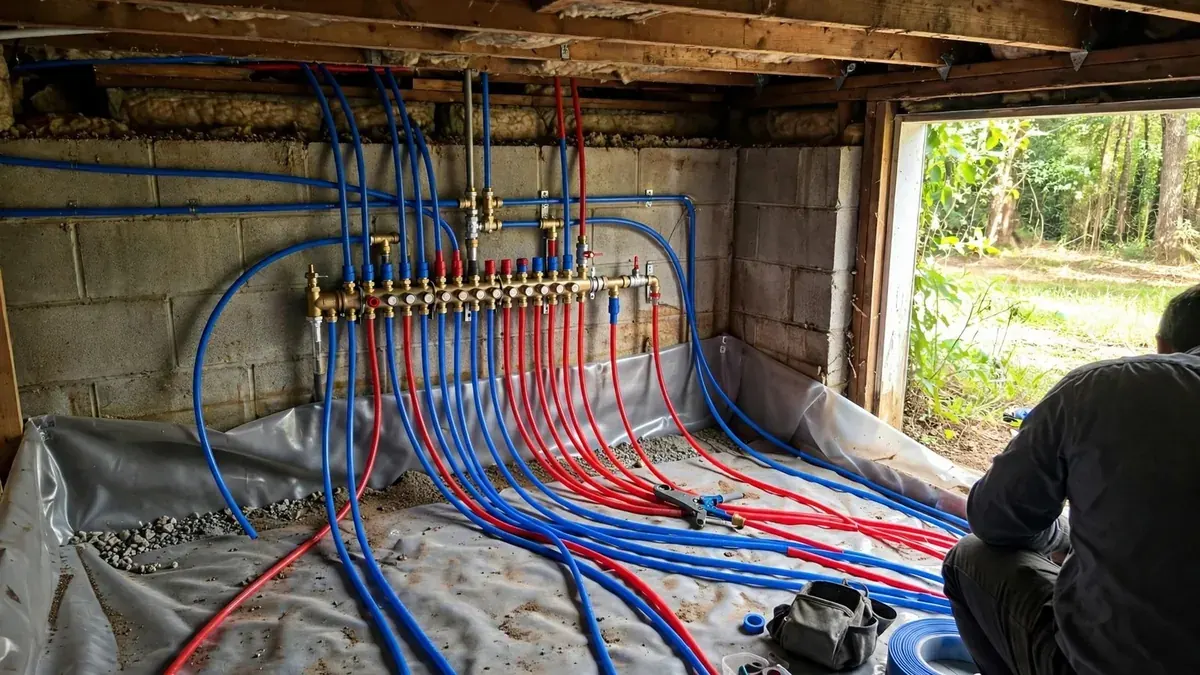
Galvanized pipe, polybutylene and other pipes that fail from the inside
Galvanized steel is a zinc-coated pipe that rusts inward over decades. Rust narrows the bore, pressure drops, water turns brown on the first draw, and eventually a thread or elbow splits. If a magnet sticks to your exposed supply pipe, it is steel, not copper or plastic.
Repiping is where code compliance matters most. Pipe material, sizing, shutoff placement and support spacing follow the plumbing codes adopted locally (built on the UPC and IPC model codes), and many jobs need a permit and an inspection. Ask the plumber for the SC licence number and confirm it at llr.sc.gov before work starts.
Goose Creek's growth took off around 1970, so galvanized supply is less likely here than in older towns, but older additions, small outbuildings and renovated houses can still have it. Homes built from the late 1970s into the mid 1990s sometimes contain polybutylene, a gray flexible plastic that can fail without warning. Some homeowners also replace CPVC before it cracks, after a pattern of brittle fittings.
Check under sinks, at the water heater and at the main. If you find gray flexible pipe marked PB, or steel with rust bloom at the joints, a repipe quote is worth getting before the first failure floods a room.
Signs it is time to price a repipe
- Brown or rusty water on first drawRust flakes loosen from the inside of galvanized pipe when it sits overnight.
- Pressure that keeps fallingNarrowed pipe passes less water, even with full pressure at the main.
- Pinhole leaks or green stainsSmall spray or crusty green on copper joints suggests thinning pipe.
- More than one leak in a yearSeveral failures along one line usually mean the whole run is aging.
- Gray flexible pipe marked PBPolybutylene has a history of failing at fittings.
- Hot water slow to arrive or weakScale and rust restrict the hot water line before the cold.
- A repair keeps failing nearbyThe new section is fine, but the old neighbor is the weak link.
One leak fixed, another a few feet away
Many homeowners call after the second or third repair on the same line. Each fix is sound, but the pipe around it is the same age and condition as the one that just failed. Pressure surges from a repair can find the next weak spot within days.
The question to ask is not whether the repair worked, but how many weak points the pipe has left. A pinhole in one spot, plus green corrosion at three joints, is a different picture from a single impact break. If you have patched the same run more than once, price a repipe next to your next repair and compare, and consider leak detection to confirm there is not a hidden leak as well.
PEX versus copper: the honest trade-offs
Both materials do the job well when installed properly, and neither is perfect. The right choice depends on your house, your water and what you want to avoid in ten or twenty years.
PEX and copper compared
| Factor | PEX | Copper |
|---|---|---|
| Installed cost | Usually lower, since it comes in coils and needs fewer joints | Usually higher, with more labor and fittings |
| Installation | Flexible, snakes through walls with less demolition | Rigid, needs more openings and more joints |
| Track record | Used in homes since the 1990s, a shorter record | Many decades of use, long proven |
| Sunlight | Must be shielded, since UV damages it | Unaffected |
| Water chemistry | Not attacked by acidic or aggressive water | Aggressive water can cause pinholes over time |
| Repair | Simple crimp or expansion fittings | Soldered or press fittings, also straightforward |
| Resale and perception | Widely accepted today | Often seen as the premium choice |
PEX makes sense when you want less demolition and a lower installed price, and when your plumber can keep it out of sunlight. Copper makes sense when you want the longest record, or when local water chemistry does not worry you. Ask the City of Goose Creek Water Division for the latest Consumer Confidence Report, and test your tap if you notice pinholes or blue-green stains.
Whichever you choose, ask which fittings will be used and who stands behind them. Brass or copper fittings and a pressure test before the walls are closed are basic requirements.
Whole-house or partial repipe: a decision framework
Which scope fits your situation
| Your situation | Likely scope | Why |
|---|---|---|
| One leak, otherwise sound copper | Spot repair, no repipe | Replacing sound pipe adds cost without benefit |
| Leaks clustered in one bathroom or the kitchen | Partial repipe of that branch | Replaces the failing run and leaves the rest |
| Hot water line failing, cold line sound | Partial: hot side only | Hot lines age faster from heat and scale |
| Slab line keeps leaking | Reroute through attic or walls | Avoids repeated concrete cuts |
| Galvanized or polybutylene throughout | Whole-house repipe | The material itself is the problem |
| Several leaks within a year across rooms | Whole-house repipe | Weak points will keep appearing |
A partial repipe is honest and cheaper, but it leaves old pipe behind, and joining new copper to old galvanized needs a dielectric fitting to slow corrosion at the joint. If most of your house is the same aged material, a whole-house job avoids paying for opening the same walls twice.
What a repipe involves from start to finish
How a repipe job runs
- Walk the house and map the linesThe plumber counts fixtures, finds the main, the heater and the manifold, and notes ceilings, walls and attic access.
- Agree the scope in writingWhich lines, which material, how many openings and who repairs the drywall.
- Schedule the water shutoffPlan to be without water during the work, and ask how long.
- Open access points and run new linesPipe is routed through attics, walls or crawlspaces to each fixture.
- Connect fixtures and pressure testEvery joint is tested before the walls are closed up.
- Patch and inspectOpenings are patched, and any required permit inspection is scheduled.
Some jobs need a permit and an inspection. Permit rules vary, so ask the City of Goose Creek building inspection division what applies, and expect a licensed plumber to know the steps.
A note on cast iron drain pipe
Repiping covers the supply side only. Cast iron drains in older homes rust from the inside and can crack or sag, and a new supply system will not fix that. A camera inspection tells you the state of the drain, and the next step may be sewer line repair rather than more supply work.
How to verify a plumber's SC LLR licence before you sign
Repiping is a big job, and a lot of people sign with whoever calls back first. A short check protects you. The SC Residential Builders Commission licenses residential plumbing contractors, and a company needs a Certificate of Authorization with a resident licensee. Some firms hold a mechanical contractor licence that carries a plumbing classification, and that counts too.
Checking a plumber's licence
- Ask for the licence numberA legitimate contractor gives it without hesitation.
- Confirm it with SC LLRLook it up at llr.sc.gov, or call the Residential Builders Commission at 803-896-4696.
- Match the namesThe name on the licence, the contract and the insurance certificate should line up.
- Ask for proof of insuranceA certificate from the insurer, not a verbal promise.
- Get the scope in writingPipe material, fittings, openings, permit handling and who patches the drywall.
Do the same check on us or anyone else you consider. It applies to a repipe, to plumbing installation and to every other job where a plumber opens your walls.
Ready to compare repiping options? Call and describe your pipe, your leaks and your house, and we will explain the right scope.
☎ Call (855) 575-2890Burst tonight, repipe later
A planned repipe is not an emergency, but a burst pipe is. If a line fails tonight, shut the main valve and call for burst pipe repair, since dispatch runs 24/7. Then use the repair as the push to price a long-term fix once the water is off and the damage is dry. We serve homes in Goose Creek and nearby Hanahan for both.
What drives the cost of repiping
- House size and fixture countMore bathrooms, kitchens and hose bibbs mean more pipe and more connections.
- Material chosenPEX, copper and CPVC differ in material and labor.
- AccessOpen attic runs are simpler than slab-on-grade layouts, two-story walls or finished basements.
- Drywall and finish repairThe number of openings and who patches and paints them changes the total.
- Permit, inspection and valve upgradesShutoff valves, a pressure reducer and permit handling may be added to the scope.
Insurance seldom funds a repipe done because the old pipe is worn, since age and corrosion are the gradual decline that policies leave out. If a burst in the old system flooded a room first, the resulting damage may be covered even though the pipe itself is not. Raise it with your insurer before you sign a repipe contract.
Call with your house age, pipe type and leak history, and we will give you a clear price before work starts. Call (855) 575-2890.
Questions Goose Creek homeowners ask
Check under sinks and near the water heater. Galvanized is gray steel that attracts a magnet. Polybutylene is flexible gray or blue plastic, often stamped PB. Copper is orange-brown and PEX is red, blue or white. Photos of your pipe help us tell you what you have.
Neither is always better. PEX costs less to install and needs fewer wall openings, and copper has the longest track record. Ask the Water Division for the latest Consumer Confidence Report, test your tap, and choose with your plumber based on your house and water.
Yes, when the failing pipe is limited to one branch or the hot line. A partial repipe costs less, but it leaves old pipe elsewhere, and the joint between new and old pipe needs the right fitting. If most pipe is the same age, a whole-house job is usually the better value.
Yes, for part of the job. The water is shut off while old lines are cut and new ones are connected and tested. Ask the plumber for a plan for the shutoff and for a temporary supply if the job runs across days.
No. Repiping covers supply pipes only. If your drains are old cast iron, a camera inspection shows their condition, and any repair would be a separate job with its own scope and price, so the repipe does not bundle it in.
Start with the licence number the plumber gives you, then look it up at llr.sc.gov or phone the Commission. The name on the licence should match your contract and your insurance certificate, because a valid number can still belong to someone else. A repipe touches every room, so make this check before any deposit changes hands.
Close the main valve, open a low faucet to relieve pressure and call. Burst pipe repair is available around the clock, and the repair does not stop you from completing the repipe afterward. Many people use the visit to ask what the rest of the pipe looks like.
Have a different question about repiping?
☎ Call (855) 575-2890