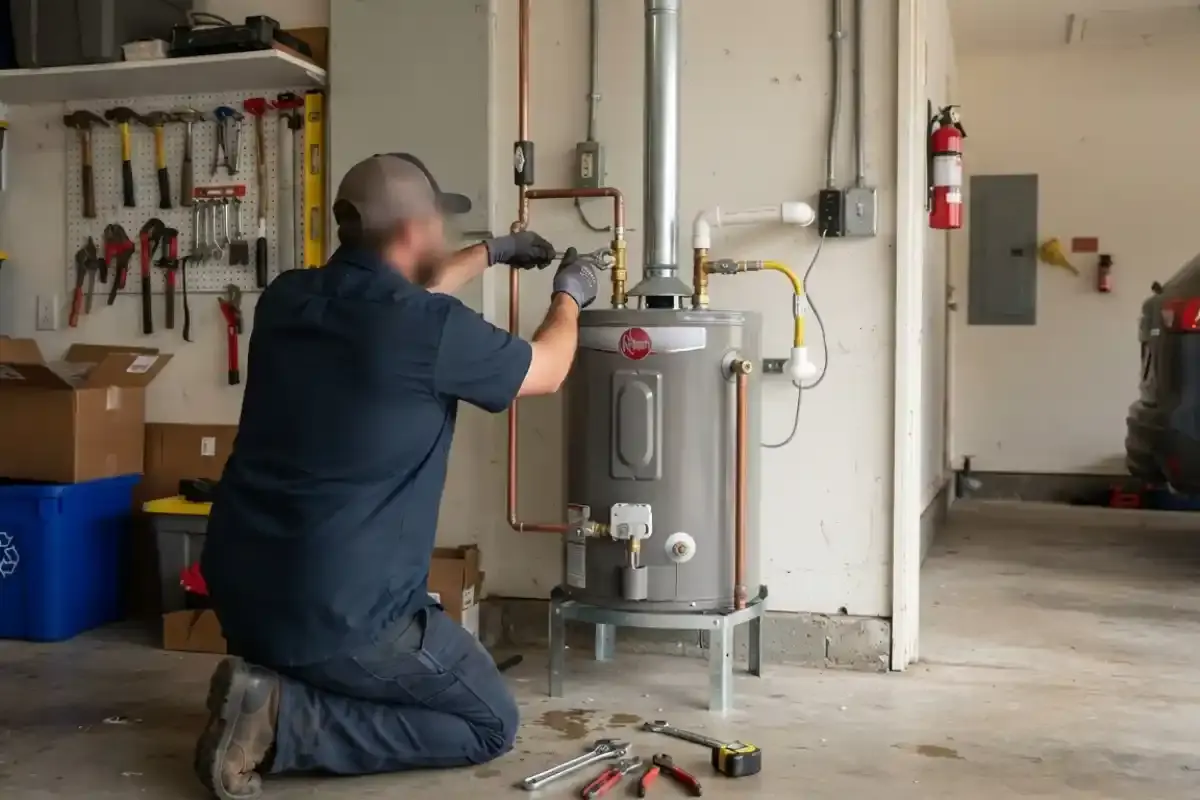
Planning a water heater install: what gets settled first
Most installs fall into three groups: a swap of the same type, a change of fuel, or a move to a new location such as a garage or utility room. Each one changes the scope. A same-type swap reuses the gas line, vent or circuit, while a change of fuel or place needs new work and a closer look at code.
A water heater installation follows the manufacturer's instructions and the plumbing codes adopted locally, including a temperature and pressure relief valve with a proper discharge line. Gas models also need venting and combustion air that meet the same standards. Ask whether a permit applies before the install date.
Call and describe the existing heater, where it sits, the fuel and how many people use hot water. Those answers let the dispatcher match the visit to the job. If the heater has already failed and water is spreading, go to emergency tank replacement instead.
How a planned install is laid out
- Site checkThe plumber looks at the closet, attic or garage, the shutoffs, the vent path, the gas line or the circuit, and the route out of the house.
- Choose the heaterSize, fuel and type are matched to your household, the space and the existing connections.
- Prepare the connectionsNew supply lines, shutoff valves, a drain pan and a discharge pipe are set up. Gas or electrical work is done to match the new unit.
- Set, vent and startThe heater is placed, vented or wired, filled, purged of air and fired up. The plumber checks for leaks, draft and temperature.
- Walk-throughYou are shown the shutoff valve, the thermostat or gas control, the relief valve and the drain valve, plus when to flush the tank.
Venting: where gas heaters succeed or fail
A gas water heater must carry exhaust out of the house, and the vent has to match the heater. A standard atmospheric heater relies on warm exhaust rising through a pipe or chimney with the right slope and height. A power vent or a condensing model uses a fan and plastic pipe, so it can run out a side wall.
Problems show up in older homes, where a large masonry chimney can cool the exhaust and weaken the draft. Combustion air also matters in a closed closet. Poor venting is a carbon monoxide risk, so the plumber checks draft after startup, and you should have a working CO alarm near the bedrooms.
Fuel and type: what each install needs
| Heater type | Venting | Other install needs |
|---|---|---|
| Gas, atmospheric | Draft hood and rising vent to chimney or flue | Gas shutoff, sediment trap, combustion air |
| Gas, power vent or condensing | Fan-driven plastic vent through a wall or roof | Electrical outlet for the fan, condensate drain on condensing units |
| Electric tank | No exhaust vent | Dedicated 240 volt circuit and panel capacity |
| Heat pump (hybrid) | No exhaust vent, but needs airflow | 240 volt circuit, condensate drain, enough open air space |
| Tankless | Special vent for gas models | Larger gas line or high-amp circuit, see the tankless page |
Expansion tank, relief valve and drain pan
Water expands as it heats. In a closed system with a check valve or pressure reducing valve, that pressure has nowhere to go, so it stresses the tank, fittings and fixtures. A small expansion tank on the cold line absorbs it. Many installs need one, and the plumber can test your house pressure to confirm.
The temperature and pressure relief valve needs a full-size discharge pipe that runs down and ends in a safe spot, never capped. In an attic or above living space, a drain pan with a drain line limits damage if the tank fails later. These small parts cost little next to the water damage they prevent.
Install day checklist for you
- Clear the pathMove items away from the heater and the route to the door. The old tank is heavy when it holds water.
- Know your shutoffsFind the main water valve before the plumber arrives and make sure it turns.
- Note the fuel and sizeWrite down the fuel, tank capacity and the make from the data label.
- Plan for a short water outageFill a few pots first. Water to the house is off during the swap.
- Check CO alarmsReplace dead batteries and test them if the heater is gas.
- Ask about the old unitHaul-away of the old tank can be included. Ask so it is not left in the garage.
Safety checklist for install day
- Clear the areaMove boxes, paint and anything flammable away from the heater location so the installer has room and nothing sits near the burner.
- Know your shutoffsFind the cold water valve to the tank and the gas valve or breaker. Do not force a stuck valve, tell the installer instead.
- Keep kids and pets outThe work area has hot water, tools and open pipes. Keep the space closed off until the job is finished.
- Smell gas, leave firstIf you smell gas at any time, leave the building and call the gas utility or 911 before you call us.
- Test before they leaveAsk the plumber to show you the relief valve discharge pipe, run hot water at a fixture and point out where to look for drips over the next few days.
Permits and inspections: ask the city
Some water heater installs need a permit and an inspection, and others do not. Permit rules vary, so ask the City of Goose Creek building inspection division what applies to your job, especially for a change of fuel, a new vent, a new gas line or a new location. Plumbing codes adopted locally govern the details.
Ask your plumber who handles the permit and when the inspection happens. An unpermitted install can cause trouble with insurers and at resale, and a licensed plumber should be comfortable answering that question.
Haul-away and cleanup
Removing an old tank takes more than loosening two pipes. It has to be drained, often through a hose to a floor drain or outdoors, then carried out, sometimes down attic stairs. Ask that the visit include removal and disposal of the old unit and any scrap fittings, so you are not left with a rusting tank and a pile of old valves.
Ready to plan your install? Call and describe your heater and its location.
☎ Call (855) 575-2890How to verify a plumber's SC LLR licence
Ask for the licence number before anyone starts. In South Carolina the Residential Builders Commission, part of SC LLR, licenses residential plumbing contractors, and a company needs a certificate that names a licensed contractor. Call the Commission at 803-896-4696 or check the number at llr.sc.gov. The plumbers we dispatch are licensed.
Write down the number, the name on the licence and the company name, then compare them with the paperwork and the truck. A plumber who cannot give a number, or whose number belongs to a different name, is a warning sign. If the install changes fuel or vent, also ask the city whether a permit is needed.
Goose Creek notes: house ages and install surprises
Goose Creek homes range from 1970s subdivisions to new builds since 2000. In older houses the heater closet may be too small for a new tank, and vent pipes may be larger than a modern heater needs. Mention the neighborhood and age of your home when you call so the plumber can plan for it.
Nearby Hanahan has a similar mix, and we dispatch to both. For information about what is in your water and how it affects a new heater, ask the City of Goose Creek Water Division for the latest water quality report and test your tap.
What drives the cost of a water heater installation
- Type and sizeTank, heat pump and tankless units differ widely in equipment cost and labor.
- Venting changesA new vent run, a power vent fan or a liner for an old chimney adds materials and time.
- Gas and electrical workA longer gas line, a new shutoff or a new 240 volt circuit are separate tasks.
- Required partsExpansion tank, drain pan, relief valve, discharge pipe and new supply lines.
- Permit and inspectionIf the city requires one, there is a fee and some scheduling around the inspection.
A planned upgrade or a move to a new location is a project you fund yourself, not a loss. Your insurer cares about what happens later: a bad connection that sprays water is a sudden event, while a seep nobody noticed is wear. Ask whether permits and a licensed installer affect your coverage before the old tank comes out.
Call for a clear price on your install before any work starts. Call (855) 575-2890.
Questions Goose Creek homeowners ask
A same-type tank swap is a few hours of work for a plumber, while a change of fuel, a new vent or a new location takes longer. The site check on the phone and at the start of the visit gives a better picture than any average.
Often yes. If your plumbing has a check valve or pressure reducing valve, heated water has nowhere to expand, and pressure spikes can damage the heater and fixtures. The plumber can test your house pressure with a gauge and tell you whether a small expansion tank belongs on the cold line.
Permit rules vary, so ask the City of Goose Creek building inspection division. A change of fuel, a new vent, a gas line change or a move to a new location are the cases most likely to be affected. Ask your plumber who handles it.
Often, yes, but it needs new supply and drain connections, a vent or circuit in the new spot and enough space for service. Confirm the permit question with the City of Goose Creek building inspection division, and ask about a drain pan and relief valve discharge routing.
Haul-away is normally part of an install, so ask when you book and make sure it is on the plan. The tank is drained first, carried out and disposed of, along with old fittings and scrap, so nothing is left rusting in your garage.
Get the licence number before the old tank comes out, then check it against SC LLR at llr.sc.gov or phone the Residential Builders Commission. The licensee named should match the company on your paperwork and the person who arrives. Be cautious if the number is missing or belongs to someone else.
Installs outside the city limits are possible. Our service area also takes in Summerville, North Charleston, Moncks Corner, Ladson and Hanahan. Tell the dispatcher your address and the fuel type you want, and they check coverage for that street before a licensed plumber is assigned to size the tank, vent and gas or electric supply.
Have a different question about water heater installation?
☎ Call (855) 575-2890