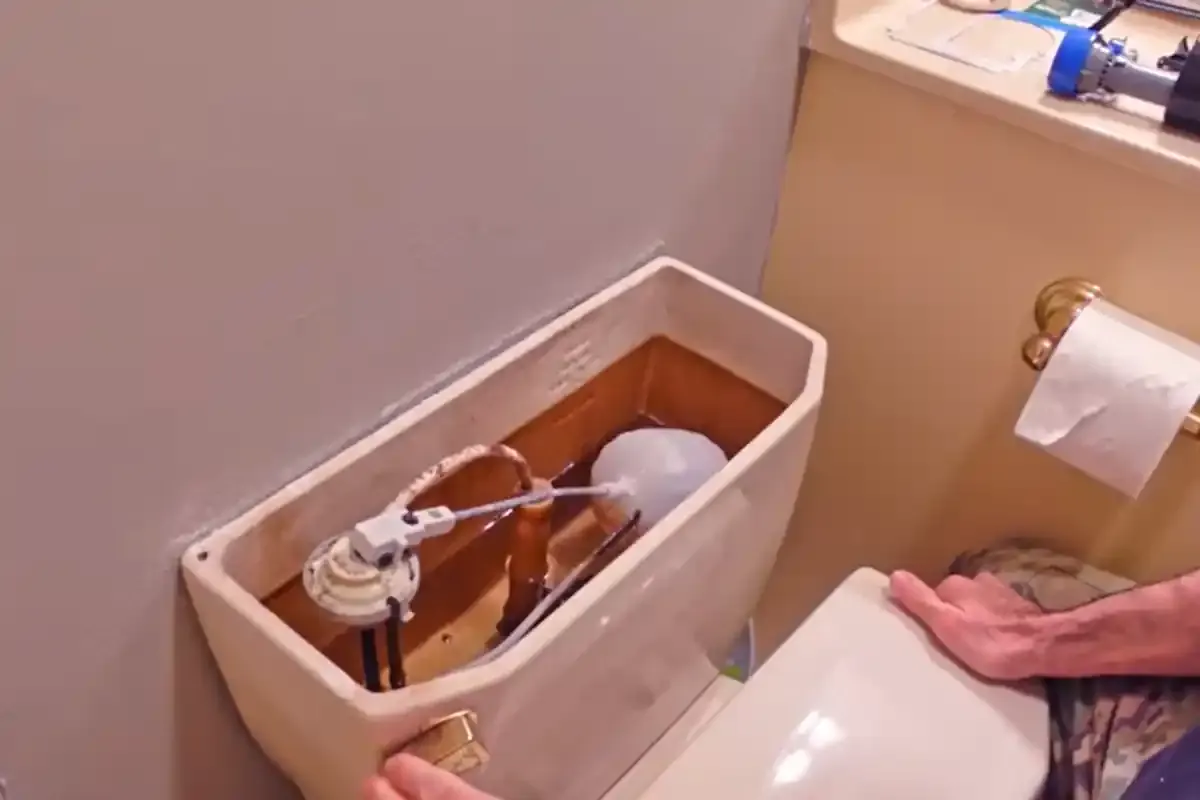
Fill valve versus supply valve
If the toilet runs, hisses or refills on its own, the fill valve inside the tank is the usual suspect. If you cannot shut the water off to the toilet, or the valve under the tank drips, leaks at the handle or will not turn, the supply valve is the problem. Mixing them up costs an afternoon, so look before you buy parts.
Shutoff valves and supply connections are covered by the plumbing codes adopted locally, and the valve itself is made to a published standard for the pipe size. Follow the valve maker's instructions on the compression fitting, and do not overtighten a plastic nut.
Which valve is the problem
| Symptom | Likely valve | What it means |
|---|---|---|
| Tank keeps refilling or hisses | Fill valve | Seal worn or float set too high |
| Water rises to the overflow tube | Fill valve | Valve is not shutting off |
| Slow refill after a flush | Fill valve or supply valve | Debris in the valve or a partly closed stop |
| Drip at the wall or under the tank | Supply valve | Packing or washer worn |
| Handle will not turn or snaps | Supply valve | Old stop corroded or stripped |
| Cannot isolate the toilet at all | Supply valve | Replace so repairs are safe |
Replacing a fill valve
A fill valve swap is one of the more forgiving repairs in the house. Shut off the water at the supply valve, flush to empty the tank, and sponge out what is left. Disconnect the supply line, unscrew the nut under the tank, and lift the old valve out.
Set the new valve to the same height as the old one, tighten the nut by hand plus a small turn, and attach the refill tube to the overflow pipe. Reconnect the supply line, open the water slowly and watch for drips. Callers often tell us the nut under the tank would not come off, and when it is cracked or corroded, stop and call a plumber instead of forcing it.
Fill valve replacement steps
- Close the supply valveTurn it clockwise until it stops, then flush to drain the tank.
- Disconnect the supply lineUse a bucket and a towel, because some water remains in the line.
- Remove the old fill valveLoosen the lock nut under the tank and pull the valve up and out.
- Install the new valveMatch the height, seat the washer, and hand tighten the nut.
- Reconnect and adjustAttach the refill tube, restore water, and set the fill level one inch below the overflow tube.
- Test for leaksFlush a few times and dry every joint with a paper towel to spot drips.
Replacing a supply valve
A supply valve change is where many homeowners should pause. To replace it, you must shut off water to the whole house, since the toilet's own stop is the one that is failing. Old valves can be soldered to copper pipe or threaded onto galvanized pipe, and each type needs a different method.
A compression stop valve on copper is the friendliest case. A soldered valve means open flame inside a wall. A corroded valve on aging pipe can crack the pipe when you turn the wrench, turning a ten-minute job into a flooded bathroom. If the old valve looks green, crusty or will not budge, bring in a licensed plumber. The same goes for valves under the sink, since the faucet repair and toilet stops share the same fittings.
Tools and parts checklist
- Replacement fill valveMatch the type to your tank, and check the height range on the package.
- New supply lineBraided stainless lines are easy to fit, and replacing the line is cheap insurance.
- Adjustable wrench and pliersA basin wrench helps reach the nut under the tank.
- Bucket, towels and spongeEven a careful job lets water escape.
- Replacement stop valve if neededKnow if your pipe is copper, galvanized or PEX before you buy.
- Flashlight and phone cameraTake a photo of the old setup so you can match it.
Stop and call a plumber if you see this
Some situations are not worth a weekend of experiments. A cracked tank, a toilet that rocks, sewage smell around the base, or a wall that is damp behind the toilet means more than a valve. So does a stop that leaks even when closed, or a main shutoff that you cannot find or turn.
For anything deeper, a toilet repair visit can cover valves, wax ring and flush parts in one trip. If water is flowing and you cannot stop it, shut off the water at the main valve or at the meter and call for help right away. Never ignore a leak that keeps soaking the floor, since it can rot the subfloor.
Goose Creek notes: the meter, the city and a running toilet
The City of Goose Creek Public Works, Water Division reads meters, repairs and maintains water lines, and maintains cross-connection control devices. A fill valve is part of the same idea on a small scale: it has a built in air gap or anti-siphon feature that keeps tank water from flowing backward into the supply. When you buy a new valve, pick one that carries that protection and install it as instructed.
A running toilet is also the classic quiet reason a bill creeps up. Check your water meter with every fixture off. If the dial still moves, a toilet is the first place to look, and the Water Division can tell you who to call about the meter and the service line.
After the new valve is in
Check the fill level, flush several times, and watch for slow drips for the next day. A drop of water on the floor tells you a joint needs another quarter turn. If the toilet refills with a noisy rattle, the supply valve may be partly closed or the line may carry debris, so flush the line into a bucket before reconnecting.
Keep the old parts until you are sure the new ones work. If you live just across the line in Hanahan, our Hanahan service page explains how we cover both towns. For any job that touches wall plumbing, ask whether permit rules apply, since permit rules vary, so ask the City of Goose Creek building inspection division.
Stuck valve or a toilet that will not stop running? Call and a licensed plumber can sort it out.
☎ Call (855) 575-2890Questions Goose Creek homeowners ask
Look at where the water shows up. Water inside the tank or running into the bowl points to the fill valve. Water on the floor under the tank, at the wall or at the handle points to the supply valve or the supply line.
Dry the area, wrap a paper towel around each joint and see which one gets wet.
Yes, if the toilet supply valve works. Close it, flush the tank, and you can swap the fill valve in minutes.
If the supply valve will not close or leaks, shut off water at the main valve first, because the toilet cannot be isolated.
Hissing usually means the valve is not sealing, or debris is stuck in the seat. A whistle can come from a partly closed supply valve or a worn washer.
Try flushing the line, adjusting the float and opening the supply valve fully before replacing parts.
It is wise. Old plastic or rubber lines harden and can burst, and reusing them under a new valve saves little.
A braided stainless line with the right fitting size is a cheap upgrade that reduces a common flood risk.
Hold the valve from inside the tank while you turn the nut, or cut the old line and nut with a small saw if you must. Do not crack the porcelain.
If the tank is old or cracked, a plumber can decide whether a repair makes sense.
Yes. Turn off every fixture, read the meter, wait an hour without using water and read it again. If the numbers moved, water is going somewhere.
Close the toilet's supply valve and recheck. If the meter stops, the toilet is the leak, and the Water Division can answer meter questions.
Have a different question about toilet guide?
☎ Call (855) 575-2890