Which toilet problem do you have?
Common toilet symptoms and the first move
| What you see | Usual cause | First move | How urgent |
|---|---|---|---|
| Water rising to the rim and spilling | Clog in the trap or the drain behind it | Close the wall valve, do not flush again | Same day, any hour |
| Puddle around the base after flushing | Failed wax ring or loose closet bolts | Shut the wall valve, dry the floor, stay off the bowl | Same day if the floor is soft |
| Tank refills every few minutes | Worn flapper or fill valve | Close the wall valve if the sound is constant | Next available visit |
| Handle limp, bowl will not flush | Broken lever, chain or flapper | Lift the lid and look at the chain | Routine |
| Water from the supply connection | Cracked supply line or worn washer | Close the wall valve fully and place a towel | Same day |
Overflowing at night or on a weekend
A toilet that spills clean tank water is a nuisance. A toilet that spills bowl water is a sanitation problem, and it will not wait for office hours. We take overflow calls overnight and on weekends because wastewater on a bathroom floor soaks drywall, baseboards and the subfloor quickly.
Modern toilets are built to published flush-volume standards, which is why an old high-volume toilet and a newer one behave so differently on the same drain. Wax ring, closet flange and supply connections follow the plumbing codes adopted locally, and a worn flange is fixed, not ignored.
The first thing to do is stop adding water. Lift the tank lid, push the rubber flapper down into its seat, and close the supply valve. Do not try another flush to see if it clears, because each flush can send more water over the rim.
Leak at the base and the wax ring
Water at the foot of a toilet usually comes from the wax ring, which is the seal between the bowl and the drain flange in the floor. Rocking the bowl slightly, a floor that feels spongy, or a dark ring on the flooring nearby all point to a seal that has let go. Less often it is a tank bolt or supply connection.
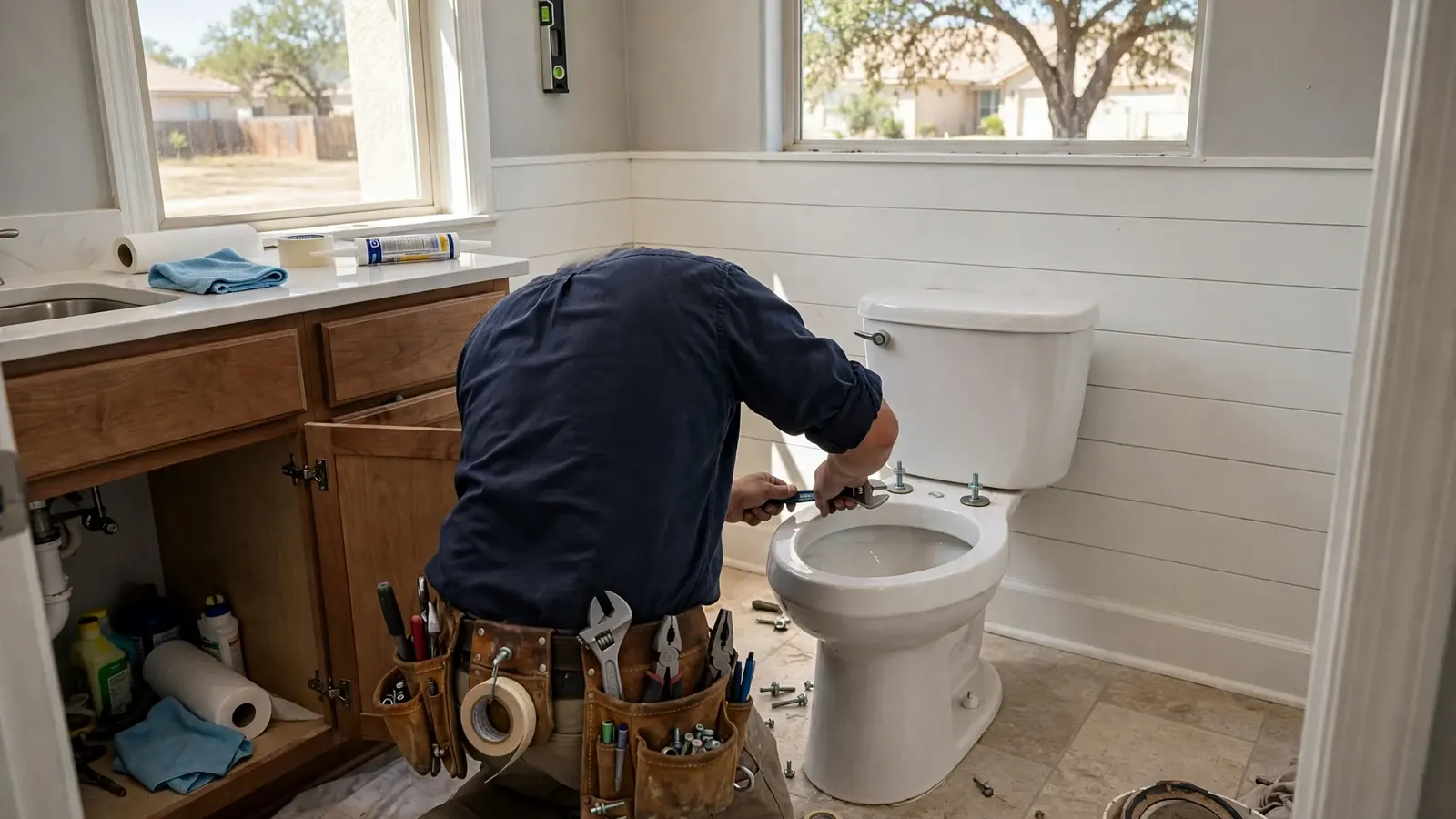
Replacing a wax ring means pulling the toilet, scraping the old wax off the flange, checking the flange for cracks, and setting the bowl back on new wax or a rubber seal with fresh closet bolts. If the subfloor has gone soft from a slow leak, the repair grows into carpentry. Staining on a ceiling below a second-floor bathroom is a reason to call sooner rather than later.
A running toilet and the water bill
A toilet that hisses or refills on its own can waste a surprising amount over a month. A common sign is a thin trickle down the back of the bowl, which a few drops of food coloring in the tank will reveal within minutes without a flush. If your bill has crept up and nothing else explains it, a meter check and leak-finding visit separates a toilet leak from a buried line.
Most running toilets come down to a worn flapper, a flapper chain that is too short or too long, or a fill valve that no longer shuts off at the right water level. These are small parts, but they are the reason many callers describe two running toilets in one house at the same time.
Fill valves and supply valves that will not cooperate
The fill valve is the tall assembly inside the tank that opens when you flush and closes when the tank is full. When it sticks, water runs through the overflow tube into the bowl without stopping. Fill valves are held to the tank by a large plastic nut under the tank, and mineral build-up can lock that nut in place, which is why a seemingly simple swap sometimes needs a careful hand.
The shutoff valve on the wall, called an angle stop, is the other part that fails when you need it most. Homes built during Goose Creek's fast growth of the 1970s may still have original valves, and a stiff one can start leaking from the stem the first time it moves. If yours will not close, the house main is your fallback, and replacing the angle stop belongs on the same visit.
Clogs that a plunger will not fix
A single clogged toilet is usually a problem in the bowl trap. A toilet that gurgles when the shower runs, or two toilets that back up together, points further down the line. In that case the blockage sits in the branch or main drain, and drain cleaning with a cable or a camera is the right tool instead of repeated plunging.
Never pour drain chemicals into a toilet. They sit in the bowl, can burn skin during the repair, and rarely reach the actual blockage.
New toilet installation and replacement
Replacing a toilet is worth considering when the porcelain is cracked, the bowl repeatedly clogs, or repairs have outrun the value of the fixture. Measure the rough-in, the distance from the finished wall to the center of the floor drain, before you buy. Twelve inches is the common standard, and the wrong rough-in means a toilet that will not sit square against the wall.
Round bowls fit tighter spaces, while elongated bowls sit about two inches longer front to back and many people find them more comfortable. Bidet seats and tall-bowl models need a nearby outlet or extra clearance, so mention them on the call. We remove the old toilet and set the new one on a fresh seal. Bigger bathroom changes may belong with new fixture installation.
How a toilet repair visit runs
- Describe what you seeTell us if water is rising, leaking or just running, and if you have shut a valve.
- Stop the waterThe plumber closes the supply and checks that the wall valve actually seals before opening anything.
- Find the real causeDye in the tank, a look at the flange, and a plunge or camera test separate a fill valve from a drain problem.
- Explain the optionsYou hear what a repair covers, what a replacement covers, and what each costs before work starts.
- Test and clean upThe toilet is flushed several times, the base is checked for weeping, and the floor is left dry.
Before we arrive: protect the bathroom
- Close the wall valveTurn it clockwise until it stops. If it will not turn, shut off the main water valve to the house.
- Lift the flapperReach into the tank and push the rubber flapper closed so the tank stops feeding the bowl.
- Pull up rugs and towelsWet cotton wicks water into drywall. Stack towels at the doorway to stop spread into hallways.
- Keep everyone off wet floorsOverflow water from a bowl is contaminated, so keep children and pets out and wash hands after cleanup.
- Do not flush or run other drainsShowers and sinks share the same line and can push more water into a blocked toilet.
Before you call, check these
- Is only one toilet affected?One toilet points to the fixture. Several fixtures slowing points to the main line.
- Where does the water appear?Base, tank, supply line and bowl rim each have a different cause.
- Does the wall valve close?If not, say so on the call so the plumber brings a replacement stop.
- Do you know the rough-in?For a replacement, a measurement from the wall to the center of the bolts saves a second trip.
- Any ceiling stains below?A stain under a second-floor bathroom means water is traveling and the visit is more urgent.
What drives the cost of toilet repair
- Part or whole fixtureA flapper or fill valve is a small job. A replacement bowl, seat and seal is a larger one.
- Condition of the flangeA cracked or corroded closet flange must be repaired before the toilet can seat and seal.
- Damage to the floorA soft subfloor or lifted tile adds carpentry that has nothing to do with the toilet itself.
- Access and fixture typeWall-hung, one-piece, and bidet-ready toilets take more time than a standard two-piece model.
- After-hours timingNights, weekends and holidays can change what the visit costs, and you hear that before work begins.
A worn flapper and a running tank are upkeep, not claims. A supply line that bursts and soaks the bathroom floor in one event may be covered, but a seep around the wax ring that rotted the subfloor over months usually is not. Take pictures of the soft spot and the dry-out, then check the wording with your insurer.
Tell us what the toilet is doing and you get a clear price before any work starts. Call (855) 575-2890.
Water on the bathroom floor? Call now and a licensed plumber can walk you through the shutoff.
☎ Call (855) 575-2890Questions Goose Creek homeowners ask
Yes. The phone line stays staffed through the night and on holidays, and an overflowing bowl or a flooded bathroom is booked as same-day work when the schedule allows. Say where the water is and whether the wall valve will close, and the plumber will know what to bring.
The usual cause is a flapper that no longer seals or a fill valve that does not shut off at the right level. Both are inexpensive parts. A toilet that runs on its own for days can waste a lot of water and show up on your next bill.
Dry the floor completely, flush a few times, and watch where the first drop appears. Water at the base right after a flush, not between flushes, usually means the seal has failed. A bowl that rocks when you sit on it is another giveaway, and so is a faint sewer smell near the floor.
Yes, in most cases. Have the box and the rough-in measurement handy so the plumber can confirm it fits your bathroom, and mention any bidet seat so the electrical plan is considered. We remove the old toilet and set the new one on a fresh seal.
That points to a partial blockage in the drain line, not the fixture. The washer water pushes air through the toilet trap on its way down. Stop using the washer and book a drain inspection before the line closes fully. The same pattern shows up in neighboring homes, and our Hanahan service area gets the same dispatch.
Try a flange plunger once if the water is level and falling. If the bowl is rising toward the rim, if other fixtures gurgle, or if the plunger brings back more water than it clears, close the valve and call.
Have a different question about toilet repair?
☎ Call (855) 575-2890