Start here: what is the water doing?
A quick way to sort the problem
- Does it drip with the handle off?A steady drip when the faucet is closed means a worn cartridge, washer or valve seat, not a loose connection.
- Does water show under the sink?Wet pipes under the cabinet mean a supply line, a nut or the faucet body is leaking, and the cabinet floor will tell you which.
- Does the handle spin or stick?A handle that turns with no effect has stripped its stem. One that will not turn is seized with mineral scale.
- Does the shutoff valve close?If the valve under the sink or at the wall will not stop the flow, the house main is the only way to stop the water, and the stop valve itself needs replacing.
- Is water coming from the wall?Spray behind a shower or tub wall is a pipe or valve body problem. Shut the main and call right away.
Burst or stuck supply valves
The small valve under a sink or behind a toilet is meant to be your quick shutoff, but old ones seize for lack of use. Forcing a stuck valve can shear the stem and turn a drip into a spray. If a valve will not move with moderate hand pressure, stop and use the main instead.
Most faucet parts are made to common published standards for thread size and flow rate, which is why a plumber can often match a cartridge without replacing the whole fixture. Supply lines and shutoff valves should also meet the plumbing codes adopted locally, so a worn braided line is replaced, not reused.
Some of the worst water calls we hear start with a valve that fails during an unrelated repair or a water heater swap. A heavy flow with no working shutoff is a nights-and-weekends emergency. Close the house main, open the lowest faucet to relieve pressure, and keep the line to us open.
Kitchen and bathroom sink faucets
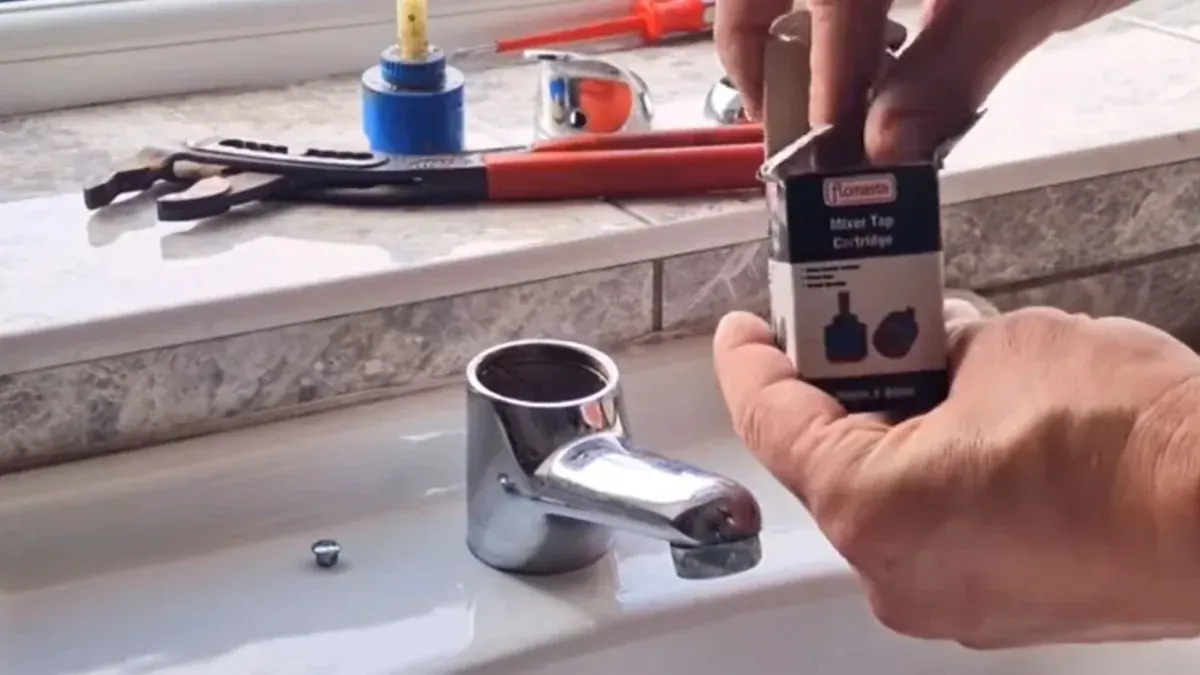
Single-handle faucets rely on a cartridge. When it wears, you see drips from the spout, a handle that feels gritty, or water leaking around the base. Replacing the cartridge restores the seal if the brass body is sound. Two-handle faucets use separate stems with rubber seats, and a drip on the hot side only usually means that one seat is gone.
Repairs make sense for a faucet in good shape. A faucet whose finish has pitted, whose body is cracked, or whose parts are no longer sold is better replaced. Imported faucet brands often need exact cartridges, so tell us the brand or send a look at the stamp on the body when you call.
Shower valves, showerheads and bathtub faucets
A showerhead that drips after you shut it off usually has a worn cartridge in the wall valve, not a bad head. A head that sprays sideways or with weak flow is often clogged with mineral deposits, which a soak in vinegar can clear. A tub spout that keeps running while the shower is on has a failed diverter.
Stripped handles are a second common call. When the knob spins on its stem, the plumber can often swap the handle and trim without opening the wall. If the valve body itself leaks inside the wall, the repair needs access, and a ceiling stain below the bathroom is the sign. Water inside a wall that damages drywall is a good moment to call a leak-locating visit before cutting.
Repair or replace the faucet?
| Condition | Repair makes sense | Replace makes sense |
|---|---|---|
| Drip from the spout | Cartridge or seat is the only worn part | Body is pitted or the parts are discontinued |
| Loose handle or spout | Set screw or O-ring has failed | Mounting threads are stripped |
| Weak or uneven flow | Aerator or cartridge is clogged | Interior corrosion reaches the valve body |
| Leak at the base | O-rings or gasket have worn | Crack or corrosion on the body |
| Fixture is original and worn | Only if parts are on hand | Often the cleaner choice |
Outdoor spigots and the garden hose line
An outdoor spigot, or hose bib, fails in a few predictable ways. A stuck hose coupling can twist the stem and start a leak inside the wall. A spigot that sprays from behind the handle has a bad packing nut or washer. Water that appears inside the house when the spigot is on points to a cracked stem or a broken pipe behind the siding.
Disconnect hoses when you are not using them. A hose left attached traps water and puts steady back-pressure on the stem. If you want a second spigot added on another side of the house, that is a fixture addition, and it sits closer to new line and fixture work than to a repair.
Jetted tub lines
Jetted tubs have their own plumbing: a pump, suction fittings, air controls and long runs of flexible pipe behind an access panel. If water collects in the pump housing, if the jets pulse weakly, or if you smell something stale from the jets, the cause is usually in those hidden lines. A leak behind the tub access panel should not be run through the pump again, because a dry-running motor will burn out.
After-hours faucet and valve calls
The call that reaches us at 2 a.m. is rarely a drip. It is a shutoff that will not close, a pipe that has split after a repair, or a fixture connection that gave way behind a vanity. We dispatch for those same-day, including weekends, because water from a failed valve keeps moving into floors and cabinets while you wait.
Goose Creek homes from the 1970s growth years often have their original under-sink stops, and many of them have never been closed since. Plan to replace any valve that has been stuck, because a replaced stop is the cheapest insurance against a later flood. Neighbors across the line in Hanahan can ask about our service in Hanahan for the same dispatch.
Before we arrive: stop the water safely
- Find your shutoffCheck under the sink, then the wall behind the toilet, and then the house main. The main is often near the water heater or at the front of the house.
- Open a lower faucetAfter closing the main, open a tub or outdoor faucet. It drains the line and cuts the pressure feeding the leak.
- Do not force a seized valveA valve that will not turn can snap. Hand pressure only, then switch to the main.
- Contain the waterPlace a bucket under a dripping trap and towels around the cabinet. Move items from the floor of the cabinet.
- Turn off power near the waterIf water is near an outlet, a garbage disposal switch or an appliance, shut off that breaker before you touch anything.
Faucet checklist for the call
- Brand and finishMatching a cartridge to your faucet is easier when the brand and the finish are on the table.
- Which handle leaksHot, cold or both. A one-sided drip narrows the part.
- Where the water showsSpout, base, handle, under the sink or through the wall. Each means a different repair.
- Valve statusDoes the stop valve close? Tell us before we arrive so the right valve is on the truck.
- Water spots belowStains on a ceiling under a bathroom or on a cabinet floor show the leak has been running.
What drives the cost of faucet repair
- Part typeCartridges, washers and aerators are small items. A new faucet, valve body or diverter changes the job.
- Brand and availabilityCommon brands have parts on the truck. Imported or discontinued models may need a special order.
- AccessA shower valve behind tile or a wall takes more time than a sink faucet under an open cabinet.
- Condition of the supply valvesReplacing seized stops adds parts and time, but it removes the main cause of later floods.
- TimingNights, weekends and holidays can change the price, and you hear it before work begins.
A faucet that drips for months is wear, and wear is not what insurance pays for. A supply line that lets go and floods the vanity cabinet is a sudden accident, and that damage may be covered. Photograph the cabinet and floor before you dry anything, then ask your insurer what your policy says.
Describe the faucet and where the water shows, and we give you a clear price before work starts. Call (855) 575-2890.
Water that will not stop? Call now and a licensed plumber can help you shut it down.
☎ Call (855) 575-2890Questions Goose Creek homeowners ask
Yes. The line stays open around the clock, and a faucet that will not shut off or a supply line spraying under the sink can be booked for the same day when the schedule has room. Tell us where the water is coming from and whether the shutoff under the sink turns.
Most drips come from a worn cartridge, washer or valve seat inside the faucet. Replacing that part fixes it in most cases, as long as the brass body is not pitted. A faucet that drips from the base instead of the spout points to O-rings.
Yes. Tell us the brand and whether it has one hole or three so we can confirm the deck fits. We disconnect the old faucet, set the new one with fresh supply lines, and test the stops under the sink.
Usually yes. A spray from behind the handle points to a bad packing nut or washer, and that is a small repair. If water also shows inside the house when the spigot is on, the stem may be cracked inside the wall, which needs a closer look.
Close the house main right away and leave the shower handle open so the lines drain. A cartridge that will not seal can often be replaced from the front of the wall, but a failed valve body may need the wall opened.
It can be either. A leak at the spout or fill is a faucet repair, while water around the pump or behind the access panel is part of the jet system. Turn the jets off, leave the pump unplugged, and call before using the tub again.
Have a different question about faucet repair?
☎ Call (855) 575-2890