Both toilets down and the shower is gurgling: the main line is closing
The classic sign of a main line blockage is several fixtures failing at once. A toilet that will not flush, a tub that fills with gray water when the washer drains, and a kitchen sink that backs into the laundry sink are all the same problem seen from different rooms. Bubbling in a toilet bowl is air pushed back through the trap by water that has nowhere to go.
A cleaned sewer line still has to match the plumbing codes adopted locally (built on the UPC and IPC model codes) for cleanout location and slope. If the line has no accessible cleanout, adding one is a code-conscious fix that makes every later cleaning simpler and safer for the pipe.
In a house with a basement bathroom or a floor drain, the water appears there first. In a slab house it may be the lowest tub or shower. Once water is rising, every flush or load of laundry adds to it, so the only safe move is to stop using water entirely.
We treat these calls as emergencies at any hour. A crew can be dispatched at night or on a weekend, and same-day service is the aim when equipment is free. Tell us how many fixtures are affected and whether anything has already overflowed.
Before we arrive: hold the line and protect the house
- Stop all water useNo flushing, showers, dishwasher or laundry. Tell everyone in the house, including anyone who comes home later.
- Find the lowest drainKnow where the water will surface first so you can move rugs, boxes and electronics out of the way.
- Do not open the cleanout yourselfA full line can shoot sewage out of an opened cap. Leave it capped and we will open it with the right tools and protection.
- Keep chemicals outChemical cleaners do little to a main line blockage and can burn skin if sewage splashes.
- Check the street sideIf sewage is rising in a street manhole or a yard near the road, that points to the public system. Note it and tell us so you can report it to the right agency.
Is it your pipe or the public one?
Where the blockage may sit
| What you notice | Where it likely is | Who usually handles it |
|---|---|---|
| Only your house is backing up, neighbors are fine | Your private lateral or building drain | Your plumber |
| Neighbors report backups too | Public sewer main downstream | Sewer provider for your address |
| Sewage in a street manhole | Public line or pump station | Sewer provider |
| One bathroom group is slow | Branch line | Your plumber, see drain cleaning |
| Backup follows a heavy rain | Inflow into the public system, or a failing lateral joint | Both may be involved, start with a camera |
Sewer service in much of Goose Creek runs through Berkeley County Water and Sanitation pump stations, so confirm which provider serves your address on your bill. The practical point is simple: your plumber cleans the pipe from your house to the property line, and the provider handles the public main. If our camera shows the clog is past your property line, we will tell you so you can report it instead of paying to clear what is not yours.
How we clear a blocked main line
What happens on the visit
- Confirm the scopeWe ask which fixtures are affected and look for the cleanout. That narrows the blockage to the house line or something past it.
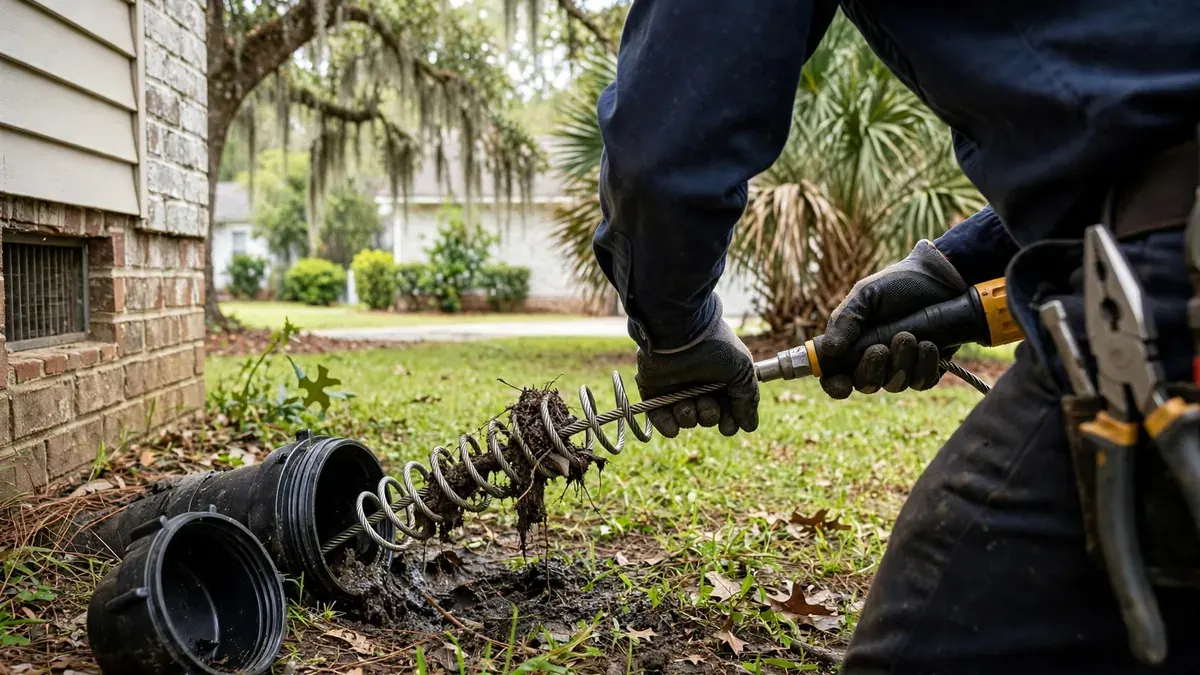
- Cable through the cleanoutA large cable machine with a cutting head breaks through the stoppage. Roots, wipes, grease and paper are the usual finds.
- Camera the lineAfter the water drains, a camera shows the condition of the pipe and any defect that caused the blockage.
- Jet if the walls are coatedIf grease or scale lines the pipe, hydro jetting cleans what the cable left behind.
- Prove the flowWe run water and watch it leave the house before we call it done.
Cabling clears the blockage. It does not tell you why it formed. That is why we recommend a camera on any main line stoppage, even a first one, so the next backup does not catch you unprepared.
The cleanout: your best friend in a backup
A cleanout is a capped pipe that gives direct access to the main line. Houses with one can be cleared in a fraction of the time, with less mess indoors. Houses without one need a toilet pulled or a roof vent used, which takes longer and risks a spill.
If your home has no cleanout, installing one is a small job that pays for itself the next time the line stops. We often add one after clearing a blockage so future visits start outside, not in your bathroom. The cap should be accessible, not buried in a flower bed or hidden behind stored items.
What commonly blocks a main sewer line
- Tree rootsRoots follow moisture into any joint, then thicken until they catch paper and fat.
- Grease buildupFat cools in the pipe and hardens, narrowing the bore over years.
- Wipes and paper productsFlushable wipes rarely break down and snag on rough spots.
- A sag or bellyA low spot in the pipe holds water and solids, which settle into a plug.
- Offset or cracked jointA shifted pipe section catches debris and lets soil in.
- Foreign objectsToys, hygiene products and construction debris from new builds.
Heavy rain, pump stations and what Red Bank Road taught the area
In March 2013 heavy rain lifted pavement around manholes on Red Bank Road near Goose Creek High School, and minor sanitary sewer overflows were reported at five Berkeley County Water and Sanitation pump stations. For homeowners the lesson is practical. A downpour can load the public system, and a backup during a storm may not be your pipe alone, so photograph the water and note the time before you call.
If your cleanout shows the line clear and sewage still rises during rain, the public main may be surcharged. That is a report for the sewer provider, and we will tell you plainly if that is what the camera shows.
After the line is open
A cleared line is a good moment to ask what caused the stoppage. If the camera found roots at a joint, the permanent answer is repairing the pipe at that spot, not another cable every year. If the line is simply old and rough, a full camera inspection on a calmer day will map the pipe so you can plan.
Calls from Hanahan have the same causes: roots, grease and a house that has outlived its original pipe. The earlier you look, the more choices you have.
What drives the cost of sewer line cleaning
- Cleanout accessA reachable cleanout keeps the visit simple. Pulling a toilet or working through a vent takes more labor.
- Distance to the blockageThe farther the cable travels, the more machine time the job takes.
- Cause of the blockageRoots, hard grease and objects need different heads and sometimes a second pass.
- Camera and jettingAdding a camera or a jetting pass costs more but gives lasting answers.
- Hour and urgencyHoliday, weekend and overnight calls can be priced differently, and we give you the figure before we start cutting.
Clearing the stoppage is upkeep and sits outside most claims. A backup that soaks carpet may be treated differently, and some policies leave sewer backup out unless it was added as an endorsement, so read yours. Take dated photos of the water line on the walls and the debris before you bag anything for the curb.
Say what is backing up, and you will have a price in hand before we start. Call (855) 575-2890.
Sewage in the house is not a wait-and-see problem. Call now and we start the dispatch.
☎ Call (855) 575-2890Questions Goose Creek homeowners ask
Yes. We take sewer backup calls 24 hours a day, every day, and dispatch a licensed plumber with a main line cable machine and camera. Same-day service is the aim when crews are available. Stop all water use, keep people out of the wet area and tell us which fixtures are affected.
If only your house is backing up, the problem is usually in your private line. If neighbors are affected or sewage shows in a street manhole, the public main is more likely. Check your bill to confirm your sewer provider, and we will tell you what the camera shows.
Water takes the lowest path. The tub, a basement drain or a shower is often the lowest opening on the main line, so it shows the backup first. It does not mean the problem is in the tub itself, and replacing the tub drain or trap will not help. The blockage is farther downstream, in the main line, and that is where the cable has to go.
Yes, usually through a toilet or a roof vent, but it takes longer and is messier, since we have to protect the floor and set up indoors. We often recommend adding a cleanout while we are there so the next visit starts outside the house and the next stoppage costs you less time and mess.
It depends on the policy. Many cover sudden accidental damage but exclude sewer backup unless you added a rider. Call your insurer, take photographs and keep damaged items until they say otherwise. The policy wording decides what is covered, and an adjuster may want to see the water line and the affected materials before anything is thrown away.
It can be either. Roots in a joint swell with soil moisture, and a rain-loaded public system can push water back toward homes. A camera on a dry day shows if your lateral has defects. If it does, repair is the lasting answer. If it does not, the report goes to your sewer provider, with your photographs and the times the water rose.
A line in good condition may never need routine cleaning. A line with roots or heavy grease may need attention every year or two. Ask us to put a camera in and you will know which group you are in, and you can plan a cleaning schedule or a repair instead of guessing. We will explain what the video shows in plain terms.
Have a different question about sewer line cleaning?
☎ Call (855) 575-2890