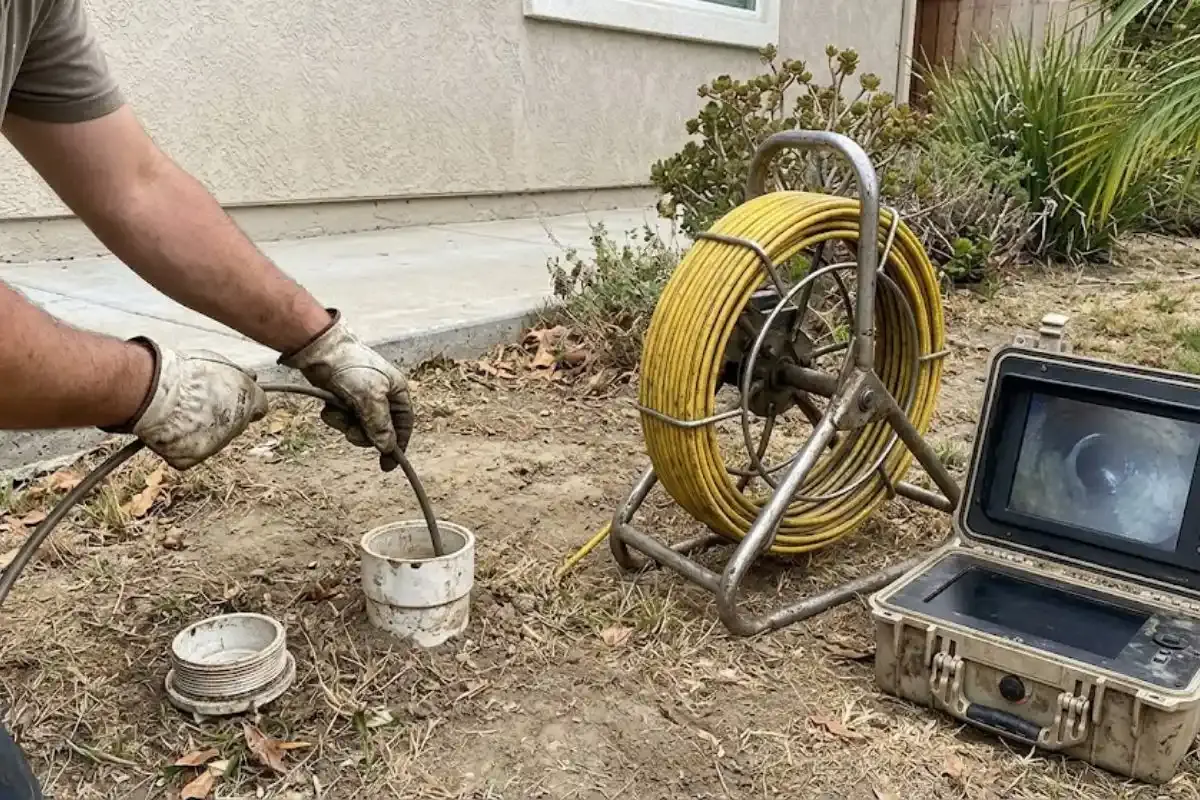
Reasons people schedule a camera look
- Buying or selling a houseAn inspector flagged slow drains or an older line, or the contract allows time for a sewer check.
- The same drain keeps cloggingCables clear it for a while, but you want to know why it returns.
- Sewer smell with no clear sourceOdor in a yard, crawl space or bathroom can come from a cracked line or a dry trap.
- Cable stopped shortA previous snake could not pass a point and you want to know what is there.
- Planning a renovation or additionNew bathrooms, a pool or a driveway pour should not sit on top of a pipe in doubt.
- A repair is being quotedYou want to see the damage before agreeing to digging or lining.
What a camera inspection actually shows
The camera head is the size of a large coin on a flexible rod, with a light and a sealed lens. We feed it through a cleanout or, if none exists, through a pulled toilet or a roof vent. As it travels, a transmitter lets us trace the pipe from above, so we can mark its depth and path on the ground.
A camera inspection is a visual record, not a code ruling, and the report should say what the camera saw and at what distance. The industry condition ratings used for sewer pipe are a general guideline, so ask the plumber to explain each finding in plain words and to show the recording.
On screen we see the pipe material, the joints and the water level inside. Cracks show as dark lines, roots as hairy masses at joints, belly as standing water in a low spot, and offsets as a step where two sections meet. Grease and scale look like crusty buildup along the walls.
We also see what is not a defect. A pipe that is rough but sound, with no cracks or roots, can often stay in service for years with a cleaning. Knowing that can save you from a repair you do not need.
Reading what the video shows
| On the screen | What it usually means | What to do next |
|---|---|---|
| Clean, smooth pipe | Line is in good shape | Nothing, or a cleaning on a schedule |
| Heavy grease or scale | Buildup narrowing the bore | Hydro jetting, then a second look |
| Roots at a joint | Crack or loose connection | Spot repair, not just root cutting |
| Standing water in a low spot | Belly where soil settled | Monitor if small, repair if it holds solids |
| Cracked or flaking cast iron | Pipe near the end of its life | Plan replacement or lining |
| Offset joint or missing section | Pipe has moved or collapsed | Repair needed before the next backup |
How the inspection runs
A typical visit
- Talk through the historyYou tell us what the drains have been doing, when you last had them cleared and why you are looking.
- Find the access pointWe look for the cleanout or pick another entry, then cover the floor or ground around it.
- Run the cameraWe push it through the line toward the street or the connection while recording the video.
- Trace and markThe locator marks pipe depth and any defects on the surface, so a repair crew would know exactly where to work.
- Review the footageWe show you the problem spots and explain what each means, and what to do and not do.
Cleaning before the camera is sometimes needed. A line heavy with debris hides cracks, and a quick cable or jetting pass may precede the video. If that is the case, we say so up front, and sewer line cleaning can be added to the same visit.
Buying a house: the inspection that protects the closing
A general home inspector looks at fixtures and visible plumbing but cannot see the buried sewer. If the house is older, has large trees near the yard line or had repeated clogs, a camera inspection fits in the contract period and costs far less than a replacement lateral. A clean video is useful too, because it tells you the line is fine and removes a worry.
If the camera finds problems, you have several paths: ask the seller for a repair, negotiate the price, or take it on knowing what is wrong. We review the footage with you, and you can ask for a copy to share with your agent. A repair estimate for a damaged lateral can follow the same day if you want numbers to bring to the table.
Locating a pipe for a contractor or a new build-out
Contractors planning an addition, a pool or a new bathroom want to know where the sewer runs and how deep it is. The locator on the camera tracks the head, so we can mark the path on the ground. That is useful to avoid breaking the pipe with excavation equipment, and to plan connection points for new fixtures.
Dry trap, sewer smell and unexplained odor
A sewer smell is not always a broken sewer. A dry trap in a seldom-used bathroom, a cracked vent or a loose toilet seal can all release gas. If running water into the trap makes the smell go away, you have your answer. If it persists, the camera checks the drain line, and we may add a smoke test for vent problems.
Goose Creek houses from different eras
Goose Creek grew fast in the 1970s and again after 2000, which means the city has two kinds of sewer line. Houses from the first wave may have clay, cast iron or early PVC that has aged, while newer subdivisions have fresh PVC but sometimes a settled belly or leftover construction debris. A camera tells you which story your house tells, and the answer decides if you clean, monitor or repair.
Pump stations run by Berkeley County Water and Sanitation handle much of the city's sewer flow, so check your bill for the provider at your address. When the footage shows a problem beyond your property line, we say so, and you can report it to the right party. People in Hanahan request inspections for the same reasons.
What drives the cost of a sewer camera inspection
- AccessA cleanout makes the setup simple. Pulling a toilet or using a vent adds labor.
- Line length and layoutA long run with several bends takes more time than a short straight lateral.
- Cleaning firstIf debris blocks the view, a cable or jetting pass comes before the video.
- Locating and markingTracing and marking the pipe path on the surface adds time but helps with later repairs.
- Report and footageA recorded video with notes for a buyer, seller or contractor takes more time than a quick look.
A camera inspection is normally a maintenance or home-purchase cost that you pay yourself. If the footage shows a collapse or break from a single event, tell your insurer and ask whether the report supports a claim. Root intrusion or an age-related sag is usually treated as wear, and the policy has the final word.
Call, say why you want the inspection, and hear the price before the camera goes in. Call (855) 575-2890.
Want to know what is under the yard before you spend on repairs? Call and set up a camera visit.
☎ Call (855) 575-2890Questions Goose Creek homeowners ask
Most residential lines are viewed in a single visit, and the time depends on access, length and whether the line needs cleaning first. We do not rush a recording that you will rely on. Ask when you call and we will describe what your visit involves.
No. The head is smooth, flexible and sized for the pipe. On very old or fragile cast iron or clay, we go slowly and decide beforehand whether to run the camera at all. We will tell you if there is a risk.
Yes. A transmitter in the camera head lets a locator on the surface trace the pipe and read its depth. We mark the path with paint or flags so you and any contractor know where it runs. Mark-outs for other buried utilities are a separate step, so call before any digging.
Yes. Ask your agent whether the contract allows time for a sewer check, and call us with the dates. We record the video and can explain it to you or your agent. If it shows a defect, you can ask the seller for a repair or a price change, and we can describe what the repair would involve.
We review the footage with you on site and describe the findings in detail, pointing to each problem spot on the screen. If you need a copy for a buyer, seller, insurer or contractor, ask when you call so we can arrange it ahead of the visit.
Planned inspections are usually scheduled during regular working hours. If a backup is happening now, that is an emergency, and our 24/7 line will send a plumber with a camera. For a simple look with no urgency, a daytime visit is easier on everyone.
Ask for the licence number and confirm it with SC LLR at llr.sc.gov. The SC Residential Builders Commission licenses residential plumbing contractors, and the check is quick before work begins. A licensed plumber expects the question. Never accept a verbal claim alone.
Have a different question about sewer inspection?
☎ Call (855) 575-2890