First, confirm your home is on a slab
Not every house here sits on a concrete slab. Some have a crawlspace with pipes visible below the floor, and a few have a mix. Pipes that run under a slab are poured into or beneath the concrete, so you cannot see them.
Under-slab repairs and any pipe reroute must meet the plumbing codes adopted locally, and permit rules vary, so ask the City of Goose Creek building inspection division. Pressure testing the repaired line before the slab is patched is standard trade practice and protects you from paying twice.
How to tell if your home is on a slab
- Look at the foundation edgeA flat concrete edge at ground level, with no vents or access hatch, points to a slab.
- Check for a crawlspace doorA small access panel in the exterior wall or a hatch in a closet floor means you likely have a crawlspace instead.
- Read the closing paperworkYour inspection report and survey usually state the foundation type.
- Check the garage and plumbing wallsSlab homes often have supply lines running through the attic or walls, with drain lines in the concrete.
- Ask a licensed plumber to confirmA short look at the layout and pipe entries answers the question reliably.
Why this matters: a leak in a crawlspace is visible and reachable. A leak under a slab has to be found with equipment and reached through concrete, and that changes the cost drivers below.
Driver one: access to the pipe
The single largest cost factor is how far the plumber has to go to reach the pipe. A leak under an open garage floor is simpler than one under a bathroom with a tub and tile. A leak near an exterior wall can sometimes be reached from the outside by digging.
Ask where the leak is, how deep it is, and what has to be removed to get to it. Cabinets, walls, a tub, and a finished floor each add labor before anyone touches the pipe. The answer shapes everything else on the quote.
Driver two: spot repair, reroute, or repipe
Three repair paths exist, and they cost very differently. A spot repair opens the slab at the leak and fixes that one section. A reroute abandons the leaking line and runs a new one through walls or the attic. A repipe replaces the whole supply system, usually when several leaks or aging pipe make patching unwise.
Comparing the three under slab repair paths
| Method | What it involves | Best fit | Watch for |
|---|---|---|---|
| Spot repair | Cut the slab at the leak and repair the pipe | One clear leak on otherwise sound pipe | Other weak spots may fail later |
| Reroute | Abandon the slab line and run a new one overhead | A leak that is hard to reach, or a line in poor shape | Walls and ceilings are opened, then patched |
| Repipe | Replace the supply lines throughout the home | Repeated leaks or pipe at the end of its life | Largest scope, best long term result |
If one leak has already happened, ask whether the rest of the pipe is likely to follow. Your plumber should be able to explain why they recommend one option over another, not simply the cheapest. For the bigger option, see the repiping process before you decide.
Driver three: what sits on top of the slab
Breaking concrete is one job, putting the house back is another. Tile, hardwood, laminate, and carpet over the slab each need different handling. Tile may crack beyond the cut line. Hardwood can be damaged by moisture long before it is cut.
Ask whether the quote includes patching the concrete and restoring the floor, or only the plumbing. Many quotes cover the plumbing and leave finish work to you or another trade. That is a normal split, but it needs to be stated so no one is surprised.
Driver four: detection comes first
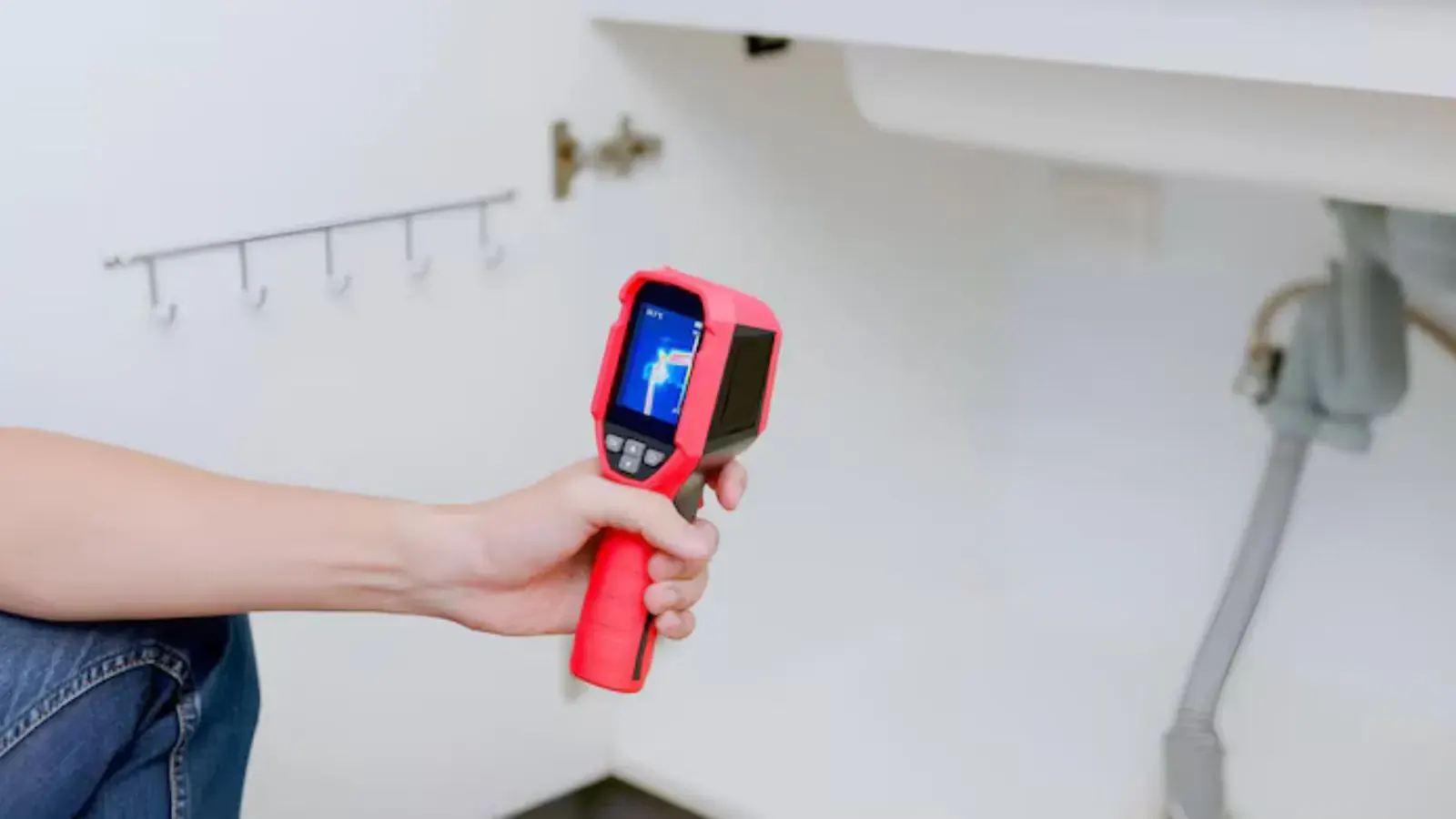
A slab leak is invisible, so the plumber has to find it. Pressure testing, acoustic listening equipment, and thermal tools narrow down the location without opening anything. A good detection result marks the pipe within a small area.
That precision is what keeps the cost down. A hole in the wrong place costs concrete work and a second hole. Read about leak detection before you let anyone cut. Signs that point to a slab leak include a meter that moves with everything off, a warm spot on the floor, the sound of running water in a quiet house, and a bill that rises with no explanation.
How an under slab repair usually unfolds
- Confirm the symptomShut off all fixtures and watch the meter, then check for warm floors and damp spots.
- Locate the leakUse detection tools to mark the line and the approximate spot.
- Choose the repair pathCompare spot repair, reroute, and repipe against the condition of the pipe.
- Open, repair, and testCut access, repair or replace, and pressure test before closing.
- Restore the finishPatch concrete and floor, or note who handles it.
While you wait for a plumber
If you suspect a slab leak, turn off the main water valve and keep fixtures closed. Move rugs and furniture off wet floors, and if water has reached outlets or appliances and you cannot reach the breaker safely, call a licensed electrician.
Do not drill or cut the slab yourself. You can hit a live line or a good pipe, and you lose the chance to have the leak located first. See the dedicated page on slab leak repair for the full process.
What drives the cost of under slab plumbing repair
- Depth and accessA pipe near an open floor costs less to reach than one under a tub, cabinets, or finished rooms.
- Repair methodSpot repair, reroute, and repipe differ greatly in scope and labor.
- Floor finishTile, wood, and carpet each add removal and restoration work.
- Detection workLocating the leak adds a step but prevents digging in the wrong spot.
- Pipe conditionAging or repeatedly failing pipe may justify replacing more than the leaking section.
Homeowner policies usually cover sudden accidental water damage but often treat slab leaks and the cost of reaching the pipe differently, and they do not cover wear, age, or gradual leaks. The policy decides, so call your insurer before work starts and ask what they need documented.
Call us with your symptoms and floor type, and we will explain which of these drivers matter for your house. Call (855) 575-2890.
Goose Creek notes: where the city line ends and yours begins
The City of Goose Creek Public Works Water Division reads meters, repairs and maintains water lines, and manages cross-connection control devices. If you suspect a leak, ask the Water Division where its responsibility ends and yours begins, because a leak before the house side of the meter is handled differently.
Goose Creek grew from 3,656 people in 1970 to about 52,000 today, with rapid building in the years after 2000. That means homes of very different ages and pipe materials sit side by side. Year of construction is a useful clue when your plumber weighs spot repair against a repipe.
Permit rules vary, so ask the City of Goose Creek building inspection division whether a slab repair or reroute needs a permit and inspection.
A note for nearby homes
Homes in neighboring Hanahan can face the same decision, and the same four drivers apply. The only real variable is the layout of your own house.
Hidden leak and a rising bill? Call us to talk through detection and your repair options.
☎ Call (855) 575-2890Questions Goose Creek homeowners ask
Call the City of Goose Creek Public Works Water Division. It reads meters and repairs and maintains city water lines, so it is the right office to ask where its responsibility ends.
Have your account number and address ready, and describe the symptom, such as a meter that moves with everything off.
Warning signs include a meter that runs with everything off, a warm patch on the floor, the sound of water in a quiet house, and a bill that rises for no reason. None of these alone proves a slab leak.
A plumber confirms it by isolating lines and using detection equipment before any digging.
It depends on the pipe. One leak in otherwise sound pipe often suits a spot repair. Repeated leaks or aging pipe often favor a reroute or a repipe, because patching only delays the next failure.
Ask your plumber to explain the condition of the rest of the line before choosing.
Often not. Many quotes cover the plumbing and a concrete patch but leave tile, wood, or carpet to another trade. This should be stated clearly on the quote.
Ask who handles each step so you are not left with an open floor and no one scheduled to close it.
Policies treat these leaks differently. Many cover sudden accidental water damage but not wear, age, or gradual leaks, and some limit coverage for the cost of reaching the pipe.
The policy decides. Call your insurer first and ask what documentation they need.
Have a different question about slab plumbing?
☎ Call (855) 575-2890