If you smell gas, stop reading and leave
A rotten-egg smell near the heater, a hissing sound at the gas line, or a pilot that keeps blowing out is not a do-it-yourself problem. Do not flip light switches, use a lighter or start a car in the garage. Walk outside, then call your gas utility or 911 from outside the house.
Once the utility says the house is safe, a licensed plumber can look at the heater. Never try to find a gas leak with a flame.
What the job actually involves
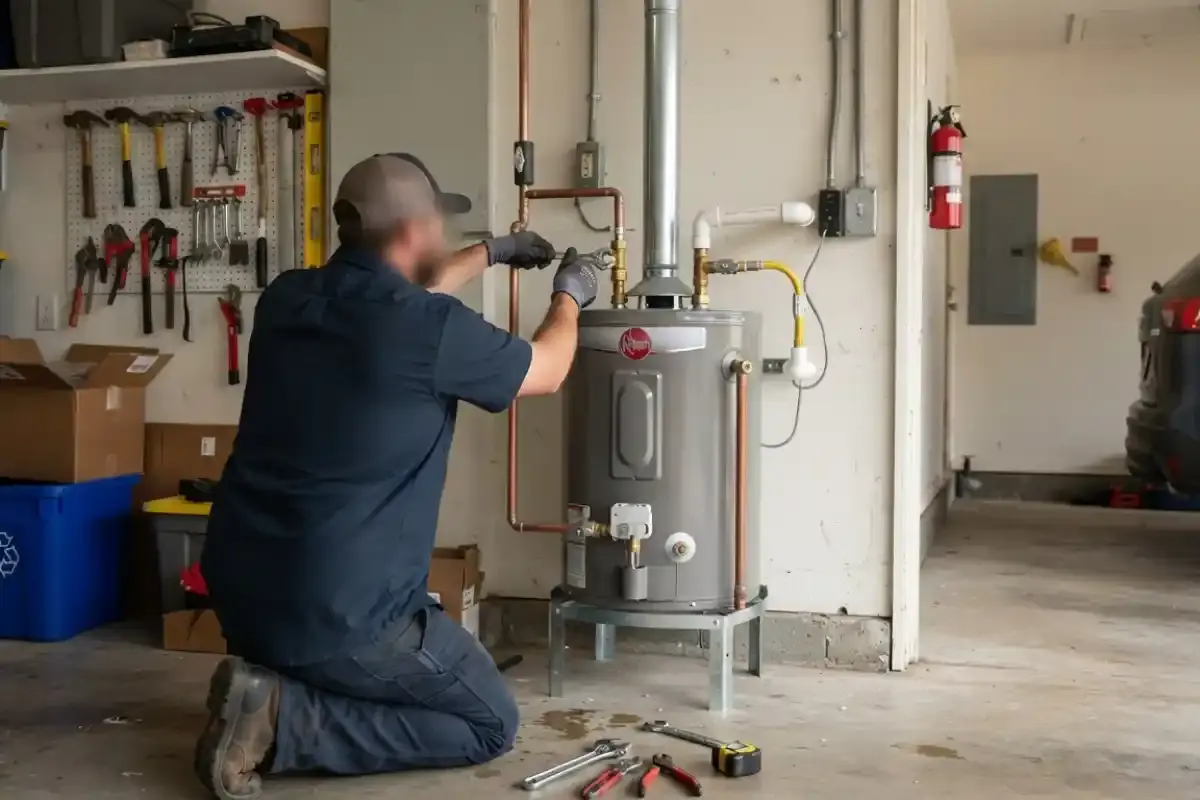
A gas tank heater has four connections: cold water in, hot water out, a gas supply and a vent that carries exhaust outdoors. Each one has to be done in the right order. The tank also needs a temperature and pressure relief valve with a discharge pipe that runs safely downward.
Gas appliance work is governed by the plumbing and fuel gas codes adopted locally and by the manufacturer's instructions, and a permit and inspection are common. Ask the City of Goose Creek building inspection division what applies, and hire a licensed plumber for the gas connection.
Most of the labor is not the new tank. It is shutting off gas and water, draining 40 or 50 gallons, and moving a heavy old unit out of a closet or garage. Corroded fittings, a short vent run or a missing drain pan are common surprises once the old heater is out of the way.
Installation steps in order
- Shut off gas and waterTurn the gas control to off, close the gas valve at the heater and close the cold water valve. Open a hot tap upstairs so the tank can drain without a vacuum.
- Drain and disconnectHose the tank to a floor drain or outdoors. Disconnect the water lines, the gas union and the vent connector, and cap the gas line right away.
- Set the pan and the new tankPlace a drain pan with a pipe to a safe discharge point, then level the tank on it. Leave the clearances the label asks for.
- Connect water, relief valve and expansion tankUse new flexible connectors or fresh copper or PEX fittings, add the relief valve discharge pipe, and fit an expansion tank where the system calls for one.
- Connect gas and testUse a listed connector and a sediment trap, then test every joint with leak detector solution, never a flame. Light the pilot or start the unit only after the test passes.
- Check the vent and the burnConfirm the flue draws, the vent slopes upward, and the flame is steady and blue. A plumber checks that exhaust is leaving the house and not spilling back into it.
Why gas work is a licensed job
Gas carries two risks that water does not. A loose fitting can leak fuel into the house, and a bad vent can push carbon monoxide into the rooms where your family sleeps. Neither problem announces itself until it is serious, which is why testing and venting are part of the job and not an extra.
Some work also needs a permit and an inspection, and rules vary, so ask the City of Goose Creek building inspection division before any work starts. To check a plumber, ask for a licence number and confirm it with SC LLR at llr.sc.gov. The SC Residential Builders Commission licenses residential plumbing contractors, and a quick lookup tells you the person at your door is real.
What a homeowner can do versus what a licensed plumber should do
| Task | Homeowner | Licensed plumber |
|---|---|---|
| Check the tank label and age | Yes, read the data plate | Confirms sizing and condition |
| Turn off water at the shutoff | Yes | Yes |
| Disconnect and cap the gas line | No | Yes, with leak testing |
| Connect the vent and set clearances | No | Yes, with a draft check |
| Fit the relief valve and discharge pipe | No | Yes |
| Add the drain pan and expansion tank | No | Yes, sized to the system |
Venting and combustion air
A standard gas heater burns indoor air and sends exhaust up a flue. The vent connector must slope upward toward the chimney or vent pipe, stay tight at every joint, and keep its distance from anything that can burn. A water heater packed inside a small closet with a solid door may not get enough air to burn cleanly.
Signs of poor combustion include soot streaks on the draft hood, a yellow or lazy flame, a flame that rolls out at the front, and a heater room that smells stale. Any of these means the heater should be shut off and looked at before the next shower. If the house has a carbon monoxide alarm, test it when the new heater goes in and replace it if it is old.
Drain pan, relief valve and expansion tank
A drain pan catches the slow leak that every tank eventually develops. Piping the pan to a floor drain or outside keeps a small failure from becoming a stained ceiling, especially when the heater sits in an attic or above living space. The relief valve discharge pipe should end where a hot spray cannot hit anyone, and it should never be capped.
An expansion tank absorbs the pressure that builds when water heats up in a closed system. If your home has a check valve or a pressure reducing valve at the meter, thermal expansion has nowhere to go, and the pressure strains fixtures, supply lines and the tank. Dripping from the relief valve every time the burner runs is a common clue that the system needs one.
Before the plumber arrives, check this list
- Clear the areaMove storage at least a few feet back so the old tank can be tipped and carried out.
- Find your shutoffsKnow where the main water valve and the heater gas valve are, and that both turn.
- Note the old tank's data platePhotograph the size, fuel type and age so the replacement matches your needs.
- Look for water stainsDark floor spots or rust trails tell the plumber whether the old tank has already leaked.
- Check the carbon monoxide alarmPress the test button and replace the batteries if the alarm is quiet or old.
- Plan for no hot waterThe job takes a good part of a day, so schedule showers and laundry around it.
Install or replace: which word applies to you
If your home had no gas heater before, or you are moving the unit to a new spot, you are looking at a new water heater installation with fresh gas, vent and drain work. If you are swapping a failed tank in the same closet, it is a water heater replacement that reuses much of what is already there.
The difference matters because a replacement can reveal old problems that were hidden for years. A vent that met the rules in one era may fall short today, and a plumber should tell you plainly when something else needs fixing before the new tank goes in.
Goose Creek notes: older houses and the water coming in
Goose Creek grew fast in the 1970s and has grown fast again since 2000, so the city holds both homes that are decades old and newer ones. A heater in a house from the 1970s may sit on an older vent or in a tight closet, and that is worth checking when the tank comes out. Ask your plumber to look at the flue and the clearances while the old unit is out of the way.
The City of Goose Creek Public Works, Water Division publishes an annual Consumer Confidence Report on its water page. Read it before you shop, and test your own tap if the tank has crusted over inside. Sediment inside the tank is a sign to ask about flushing habits on the new one.
What a safe finished job looks like
When the work is done, you should see a pan under the tank, a discharge pipe pointing down, a sediment trap on the gas line, a vent that slopes upward and is sealed at every joint, and a steady blue flame. The plumber should show you the shutoffs, the temperature setting and the relief valve test lever.
Set the thermostat so the water is hot enough for your household but not scalding, and leave the instruction manual near the heater. If a neighbor in Hanahan is shopping for the same job, our Hanahan service page shows we dispatch to both sides of the line.
Need a gas water heater installed safely? Call and a licensed plumber will talk you through the job.
☎ Call (855) 575-2890Questions Goose Creek homeowners ask
Gas and venting work is a licensed trade, and a mistake can leak fuel or push carbon monoxide into the house. Permit rules vary, so ask the City of Goose Creek building inspection division what applies to your address.
Even if a homeowner could legally do part of the job, the gas connection, vent and leak test are the pieces you least want to learn by trial.
Homes with a check valve or pressure reducing valve on the incoming line usually need one, because heated water has nowhere to expand. A relief valve that drips whenever the burner runs is a clue.
A plumber can read your static pressure and tell you whether the system is closed.
Do not relight it over and over. A pilot that will not stay lit can mean a failed thermocouple, a draft problem or a gas supply issue. If you ever smell gas, leave and call your gas utility or 911 from outside.
Otherwise, turn the control to off and call a licensed plumber.
Plan on most of a day for a standard swap, longer if the vent or gas line needs changes. The tank also needs time to heat the first full load, so shower plans may shift into the evening.
Ask the plumber for a realistic window before work begins.
A pan is wise on any tank, and it matters most when the heater sits above finished space or in an attic. A pan piped to a drain turns a slow leak into a nuisance instead of a ceiling repair.
If your old tank had no pan, ask for one with the new installation.
Homes built in the 1970s growth era may have older vents, tight closets or galvanized water lines that deserve a look during the swap. The gas rules stay the same, but older houses give more surprises.
Ask the plumber to check the flue, the clearances and the shutoff valves while the old heater is out.
Have a different question about water heater guide?
☎ Call (855) 575-2890