Why an occasional cold snap hurts more than a regular winter
Homes in colder states put supply pipes inside heated walls and bury them deep. In a mild region, builders often run lines through attics, crawlspaces, garages and exterior walls because winter rarely punishes the choice. The pipes work fine for years, then one night of hard freeze finds every weak point at once.
Pipe insulation and exposed-pipe protection should follow the manufacturer's instructions, and anyone modifying piping must follow the plumbing codes adopted locally. A published guideline from your insurer or the Goose Creek Water Division is a better source than a rumor about freeze depth.
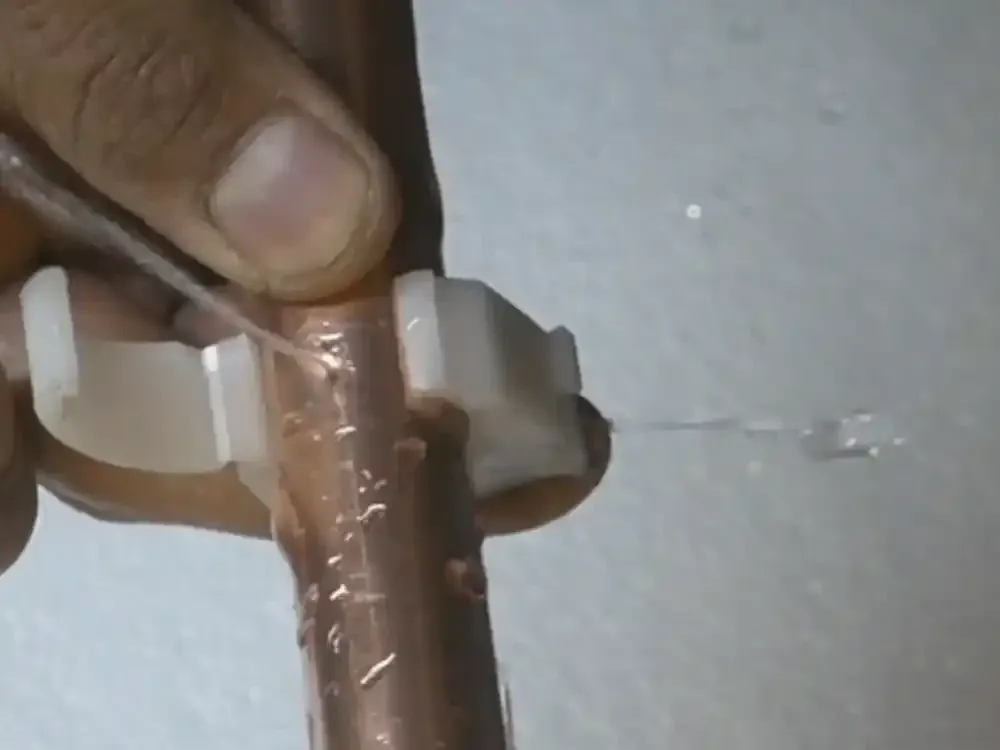
Water expands about nine percent as it turns to ice, and the pressure builds between the ice plug and the closed faucet. The pipe often splits at the weak spot, but you may not see water until the ice thaws and flow resumes. That is why a pipe can seem fine on a cold morning and then flood the house by afternoon.
Where Goose Creek homes are most exposed in a freeze
| Location | What can go wrong | Prep before a cold night |
|---|---|---|
| Outdoor spigots and hose connections | A hose left attached traps water and splits the spigot or the pipe behind the wall | Disconnect hoses, fit insulated covers, open the spigot after closing any interior valve |
| Garage supply and drain lines | Unheated air cools lines along the walls and near the garage door | Close the door, wrap exposed pipe with foam sleeves, seal gaps |
| Attic pipes and water heater | Pipes above the insulation get the coldest air in the house | Add insulation over and around lines, wrap the first stretch of heater piping |
| Crawlspace supply lines | Cold air moves through vents and openings in the foundation | Insulate lines, cover vents for the night, check existing heat tape |
| Plumbing in exterior walls | Kitchen and bath sinks on outside walls run cold overnight | Open cabinet doors, let a thin trickle run on the coldest night |
| Irrigation valves and backflow assemblies | Above-ground parts sit in open air and crack | Shut off the system, drain it and cover exposed parts |
Outdoor spigots and hoses: the five-minute job
A hose left on a spigot is the most common winter failure we hear about. It holds a column of water against the fitting, and the freezing of that column splits the pipe behind the wall. Disconnect every hose, drain it and store it before the first cold forecast.
If your spigot has a shutoff valve inside the house, close it and open the outside faucet to let the line drain. Foam covers cost little and slow heat loss, but they do not replace draining the line. Homeowners who want several exterior faucets winterized usually call because one or two are in awkward spots, such as behind shrubs or at the side of a garage.
Attic and crawlspace pipes: the ones you cannot see
Pipes in an attic sit on top of the ceiling insulation, which keeps the house warm and leaves the pipes in the cold air above it. Pipes in a crawlspace sit in a draft. Foam sleeves slip over straight runs, and tape or snap-on covers handle elbows and valves. Gaps around the pipe where it enters the wall or floor should be sealed with caulk or foam to stop cold air from blowing across it.
Electric heat tape is common on crawlspace lines, but old tape cracks, and any tape must follow the manufacturer's instructions. Do not overlap it, do not wrap it over insulation unless it is rated for that, and replace anything that looks brittle. Check that the thermostat or cord works before the night you need it.
Water heater: protect it, then watch for leaks
A heater in a garage or attic faces the same cold as the pipes. Insulate the hot and cold lines for the first few feet above the tank, keep the unit powered or the pilot lit, and do not turn it off to save energy on a freeze night. A tankless unit installed in an unheated space needs power for its freeze protection, so check the manual.
After a cold spell, look at the tank base, the relief valve pipe and the connections for drips. A small puddle or rust streak is a warning that something shifted, and burst pipe repair is a different job than a worn-out fitting, so describe what you see when you call.
The night-before checklist
- Know where your main shutoff isFind it today, test that it turns, and tell everyone in the house where it sits.
- Disconnect and coverHoses off, spigot covers on, irrigation off.
- Open cabinet doorsDoors under kitchen and bath sinks on outside walls let heated air reach the pipes.
- Let faucets dripA thin steady trickle on the coldest night keeps water moving. Pick faucets on the far side of the house or on exterior walls.
- Keep the heat onSet the thermostat no lower than about 55 degrees, even if you travel, and keep the garage door closed.
- Shut down if you leave townFor a long trip, shut off the main and drain the lines, then ask a neighbor to check the house.
If a pipe bursts: what to do, in order
- Shut off the main waterTurn the main valve clockwise to stop flow. If you cannot find or turn it, that is the moment to call.
- Open the lowest faucetOpening a faucet at the lowest point drains the line and lowers pressure on the break.
- Protect the electricsIf water is near outlets, an appliance or the breaker panel, turn off power at the panel only if you can reach it safely and dry. Do not stand in water.
- Thaw only with gentle heatA hair dryer or warm towels, starting at the faucet and moving toward the frozen part. Never use an open flame or a propane torch.
- Photograph before you cleanTake pictures of the pipe, the water and any damaged items. Your insurer will ask.
- Call for repairA plumber can find all the splits, not just the one that is spraying.
After the thaw: the leak you did not notice
Not every freeze damage shows up as a flood. A small split can seep behind a wall for weeks, and the clue is usually the water bill or the meter. Turn off every fixture and appliance, then watch the meter: if the dial or low-flow indicator keeps moving, water is going somewhere.
Other clues are a damp smell in a closet, a stain forming on a ceiling, or the water heater running more than usual. Leak detection can pinpoint a seep with acoustic and thermal tools before anyone cuts drywall, which saves repair work. If you see signs, do not wait for the next freeze.
Goose Creek notes: what the city handles and what you do
The City of Goose Creek Public Works Water Division reads meters and repairs and maintains water lines. It is at 200 Button Hall Avenue, and Public Works can be reached at 843-824-2200. Find your meter box and your own shutoff valve before a freeze, since a leak between the meter and the street is usually on the city's side and a leak after your shutoff is a plumber's job.
If the water is off at the meter or water is bubbling up at the street, call the Water Division. If water is flowing inside your house, shut your own valve first and then call a plumber.
Cold night coming and unsure about your attic or crawlspace pipes? Call us and a licensed plumber can talk through your setup.
☎ Call (855) 575-2890We also dispatch to neighboring Hanahan, where the same occasional freeze catches the same unprotected pipes.
Questions Goose Creek homeowners ask
First check whether other taps are dry and whether the meter box shows a leak. If water is out at the meter or bubbling at the street, call City of Goose Creek Public Works at 843-824-2200. If the outage is inside your house, shut your main and call a plumber.
Yes, on the coldest nights. A thin steady drip keeps water moving and relieves pressure between ice and the faucet. Choose faucets on exterior walls or at the far end of the house, and let both hot and cold lines run slightly.
It can be, if you follow the manufacturer's directions. Do not overlap the tape, do not use damaged or brittle tape, and plug it into a protected outlet. If you are not sure it works, test it before the cold night.
Yes. Ice can split a pipe while it is frozen, and water only shows when it thaws. After a freeze, check the meter with everything off, look for stains and damp spots, and listen for running water. A pipe that splits behind a wall can seep for days before a stain appears.
Keep it at about 55 degrees or higher. For a long trip, shut off the main and drain the lines. Ask a neighbor to check the house after a cold night so a small leak does not run for days.
Yes. We offer 24/7 emergency dispatch for burst pipes. Shut off your main water first, open the lowest faucet, and call. A licensed plumber is dispatched to stop the leak, find every split and tell you what the repair involves. Photograph the damage for your insurer before cleanup.
Have a different question about seasonal guide?
☎ Call (855) 575-2890